Latorica Floodplain
FIELD NOTE · PTRUKŠA · 9 JUNE 2026
A river can disappear from the landscape and still remain present. Along the Latorica, the water has left behind a hidden memory written beneath the surface of the land.
The soil in the Latorica floodplain was formed over millennia from material brought here by the river. Heavy clay mixes with sand deposited during floods or blown in by the wind. The result is a mosaic of soils typical of this part of the Pannonian Basin. Within a few square meters, one can find hard, cracked clay as well as pure sand.
It is precisely this unpredictability that predestined the landscape for floodplain forests and alluvial meadows, rather than intensive agriculture.
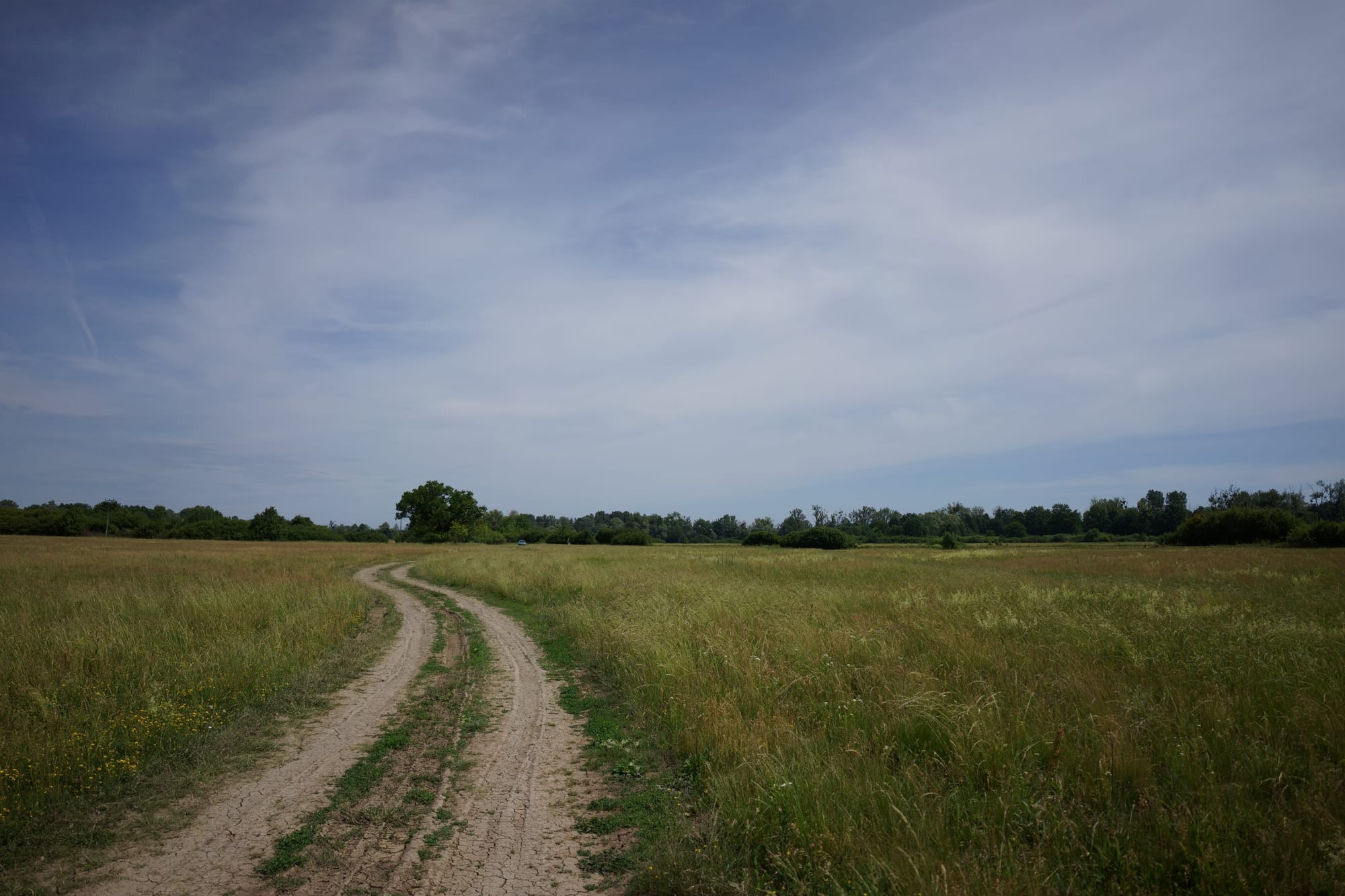
Right through such a meadow runs an old road, its ruts cracked by the prematurely intense June sun. On the horizon, a wall of floodplain forest shimmers in the hot air – a promise of shade.
For decades, men from Ptrukša walked or cycled along this road, heading for their shifts at the railway transshipment station in Čierna nad Tisou. It was not an exceptional road. Nor was it romantic. It was part of a daily routine, repeated so often that it became etched into the landscape.
Today, few people pass through here. Sometimes fishermen, other times conservationists, cycling tourists, or a tractor with a mower. It is only because of them that the road has not yet completely overgrown.
The meadow ends abruptly.
The sun, which just a moment ago was scorching the open plain, vanished behind the crowns of the first trees. The dry, hot air was replaced by air that was humid and fresh. Sounds appear that could not be heard on the freshly mown meadows – birds hidden in the tree canopies, insects buzzing over the water, the rustle of leaves in the wind.
The distance is only a few dozen meters, yet the difference feels as if one has stepped into another world.
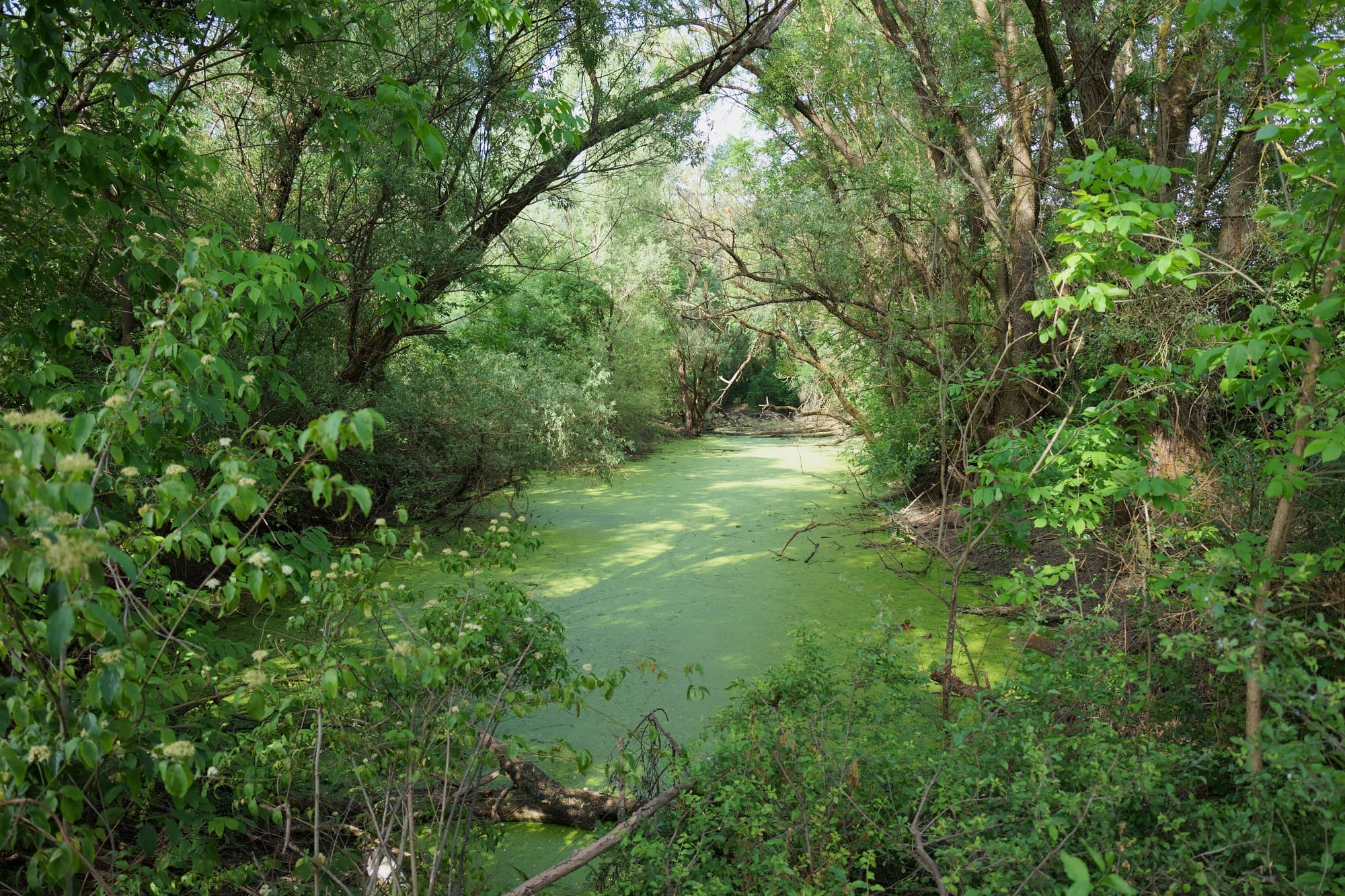
Alongside the road, the first oxbows of the Latorica appear. Some remain open bodies of water, while others slowly disappear beneath a thick green carpet floating on the surface and among fallen tree trunks.
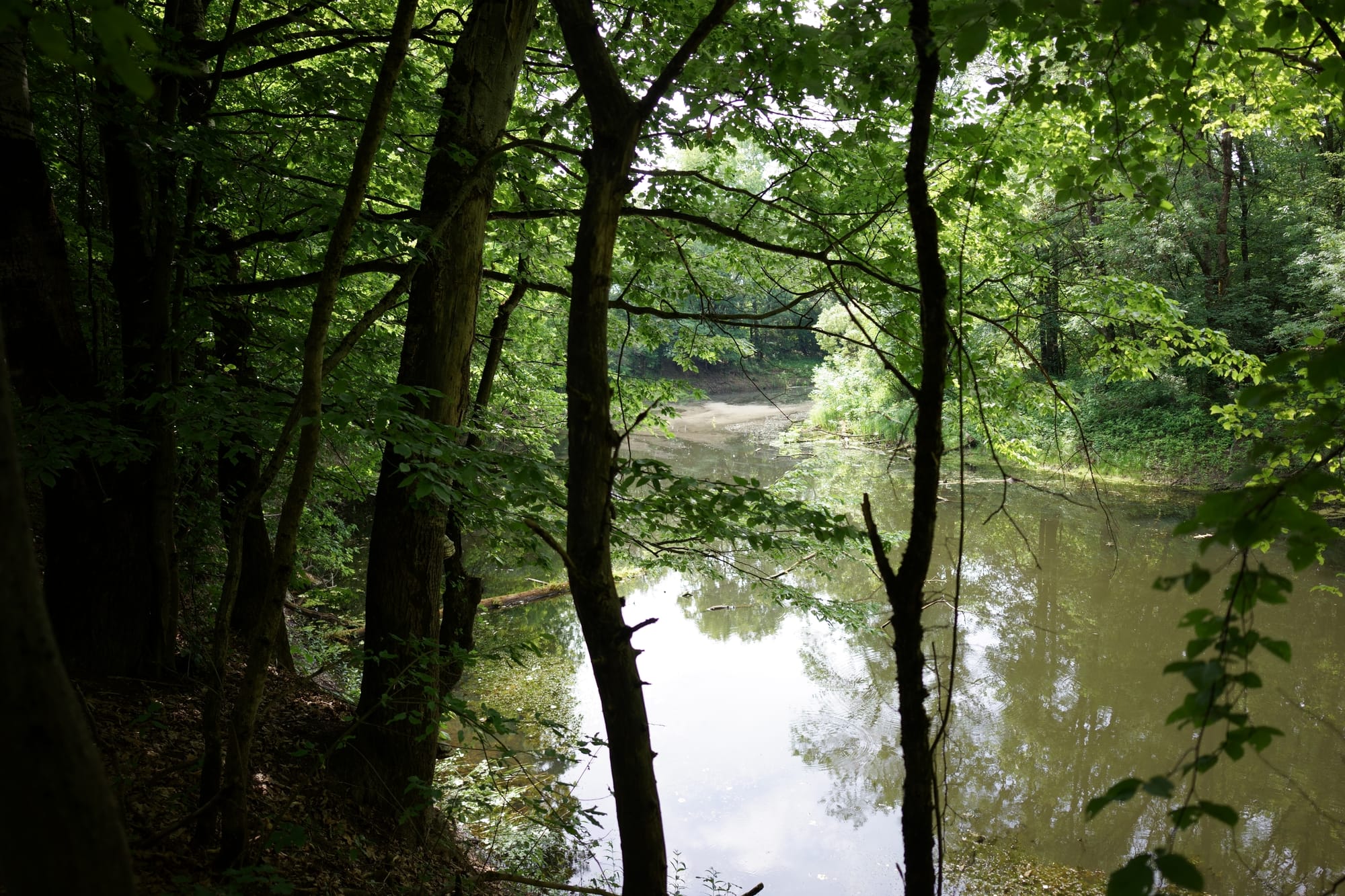
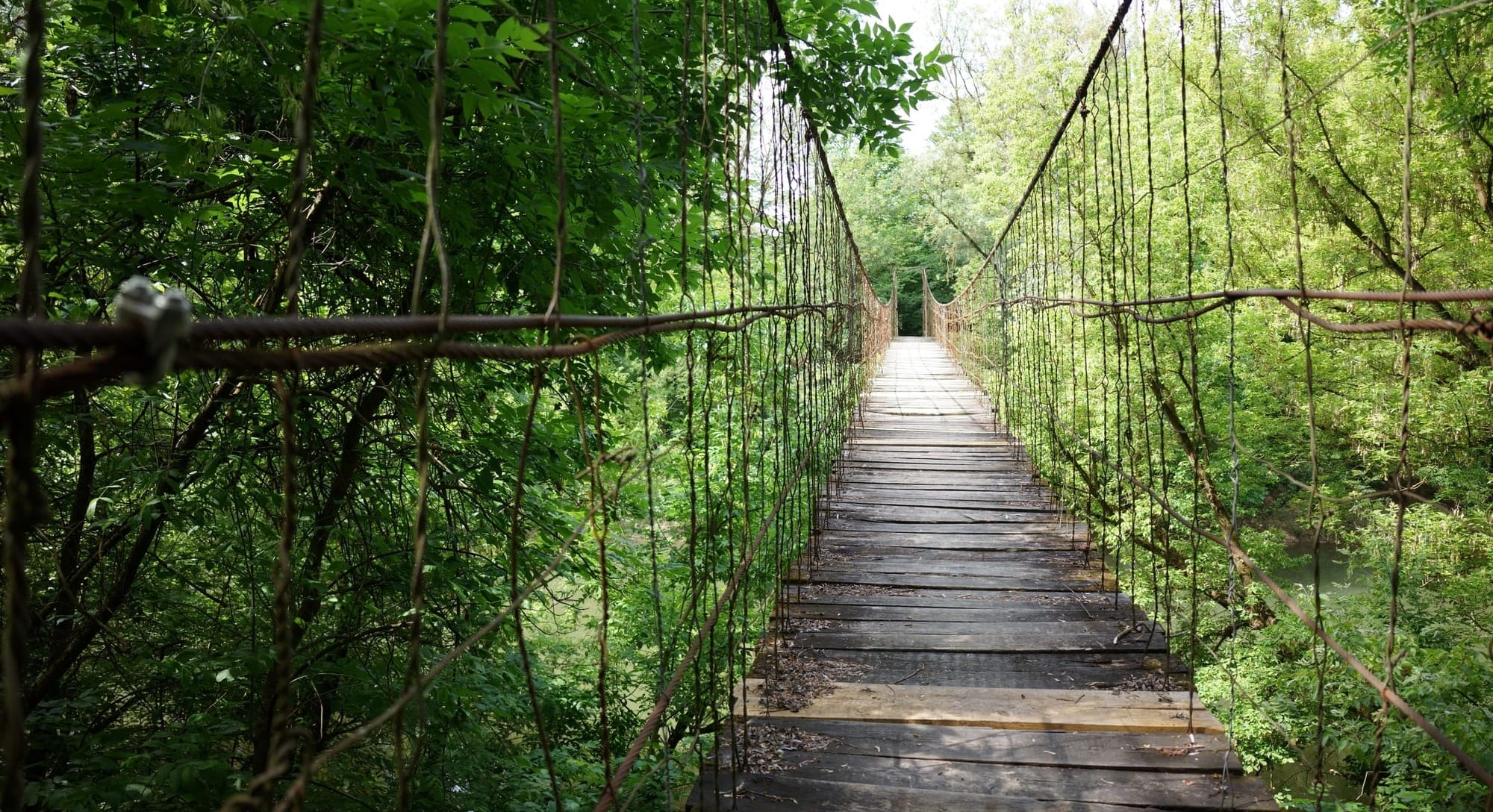
After walking further through the floodplain forest, a suspension footbridge appears among the trees.
It was built by locals in 1968. Until then, crossing to the other side of the river meant a detour of dozens of kilometers.
The structure was never meant to be elegant. It was meant to make life easier. And it serves its purpose to this day.
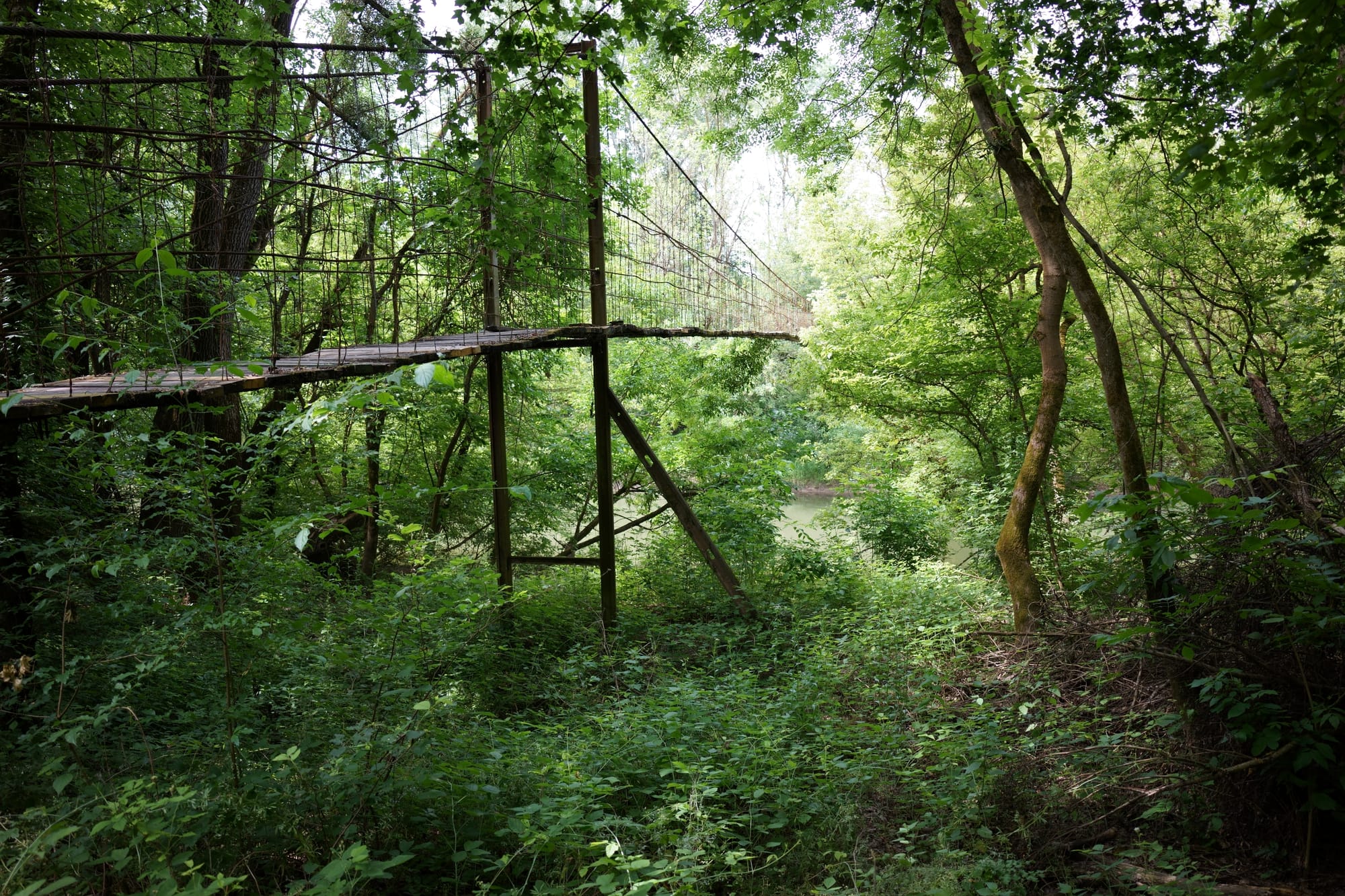
With every step, the footbridge gently sways.
The wooden planks bear the marks of decades of moisture and the changing of the seasons. Some have warped, while others are gradually beginning to rot.
Eight meters below, the Latorica flows. Not quickly, not loudly, but still like a river that has preserved its own rhythm.
The footbridge does not feel like a solid piece of engineering; it looks more like a temporary agreement between man and the river.
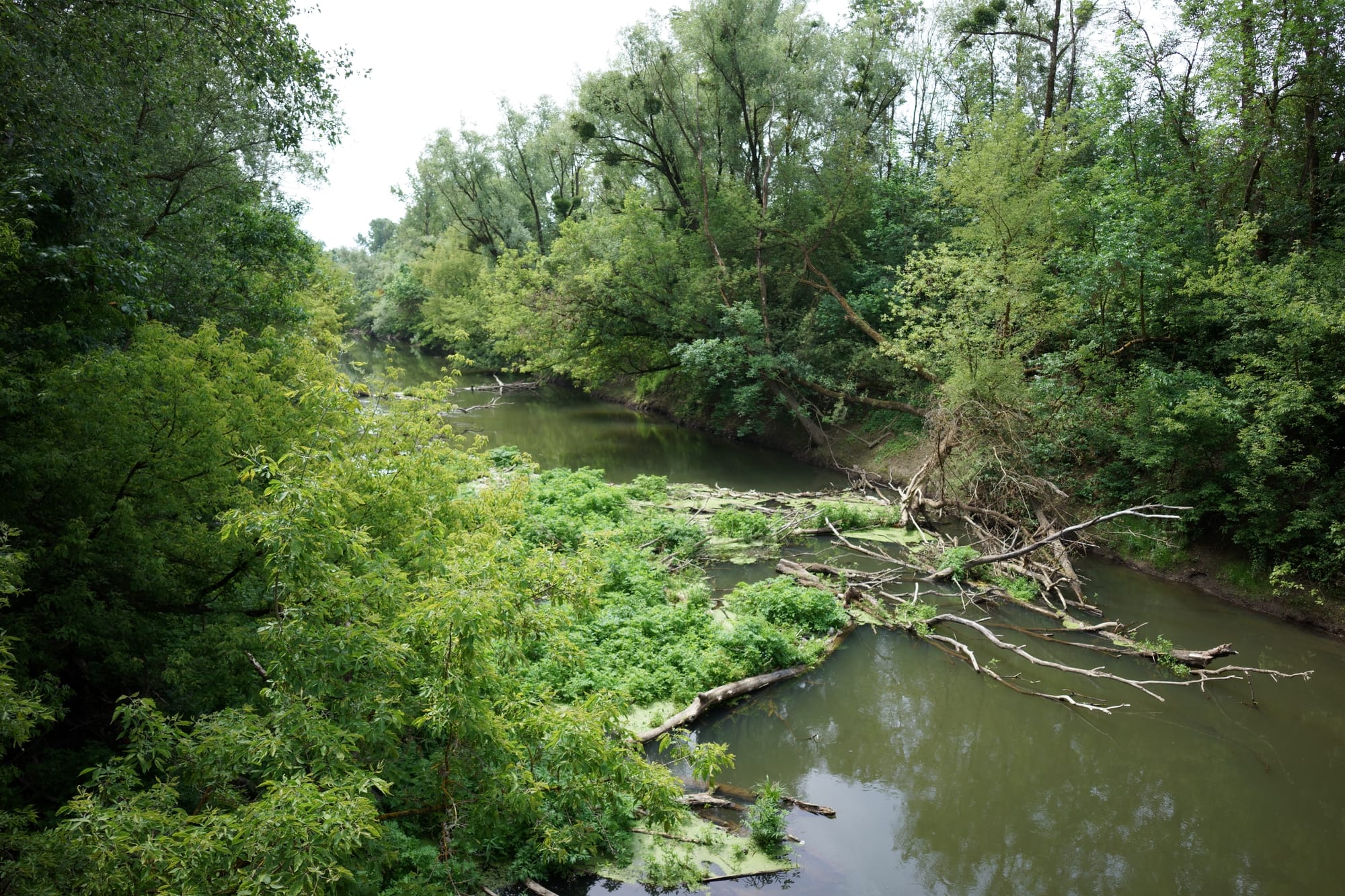
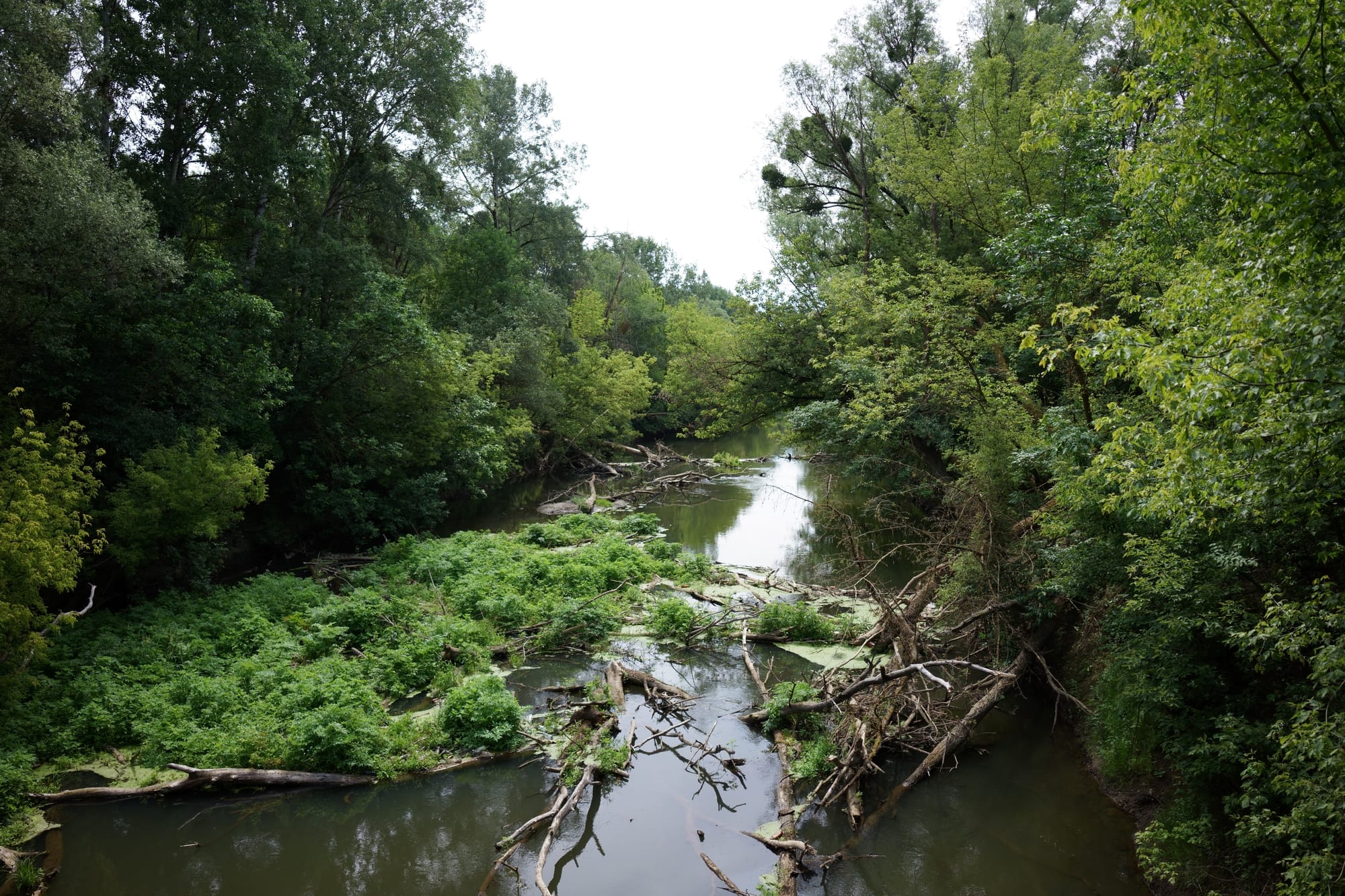
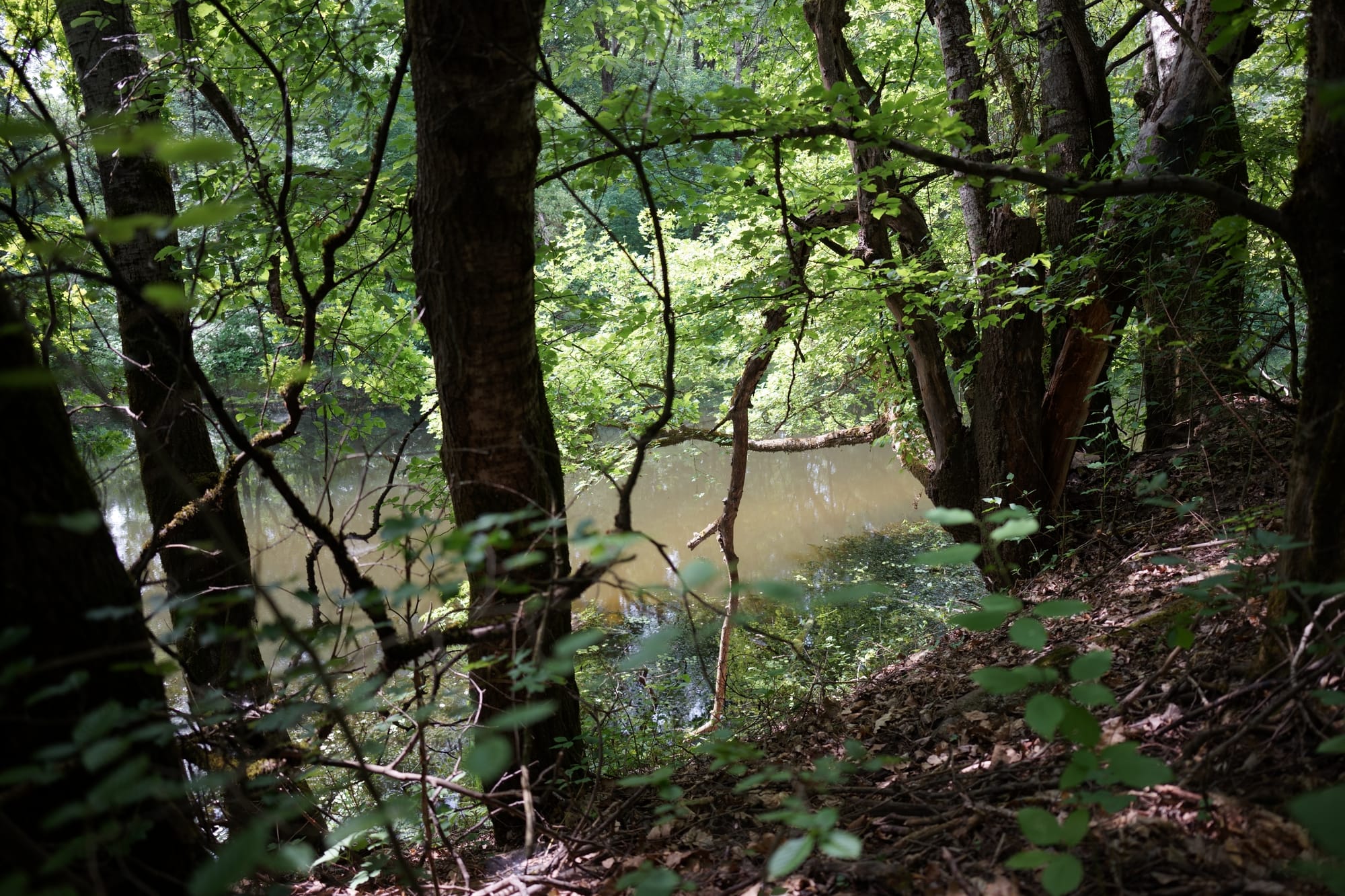
The way back leads once again alongside the old oxbows. Each has a different color, a different surface texture, a different degree of overgrowth. Only when looking at them side by side does it become clear that these are not random bodies of water, but individual stages of the very same story. The Latorica is not just a river.
It is a system.
The main channel carries the water away. The old oxbows retain it, slow it down, and transform it into conditions where forms of life emerge that the river itself cannot create.
A floodplain landscape is often spoken of as a space shaped by the river.
The river shapes the floodplain, but at the same time, the floodplain shapes the river.
One without the other makes no sense.
Together, they form a single living system.
Text and Photo: Vladimír Jenčurák