Metzenseifner Homerschmied
I received my first spade as a boy. My grandfather Ander from Kecerovce handed it to me in the garden with a sentence that has stayed with me ever since:
Kedz chceš veľo zrobic a še nenarobic, ta mušiš mac ryľ z Medzeva," he told me in the local dialect — if you want to get a lot done without wearing yourself out, you need a spade from Medzev.
My other grandfather, a great moralist from Tvrdomestice, had his own way of putting it:
"Shit tools, shit work, my boy."
I took both pieces of advice to heart, and they have served me well more than once.
The idea of returning to Medzev after many years, to see how the places of my youth had changed, came to me while looking at that old Medzev spade.
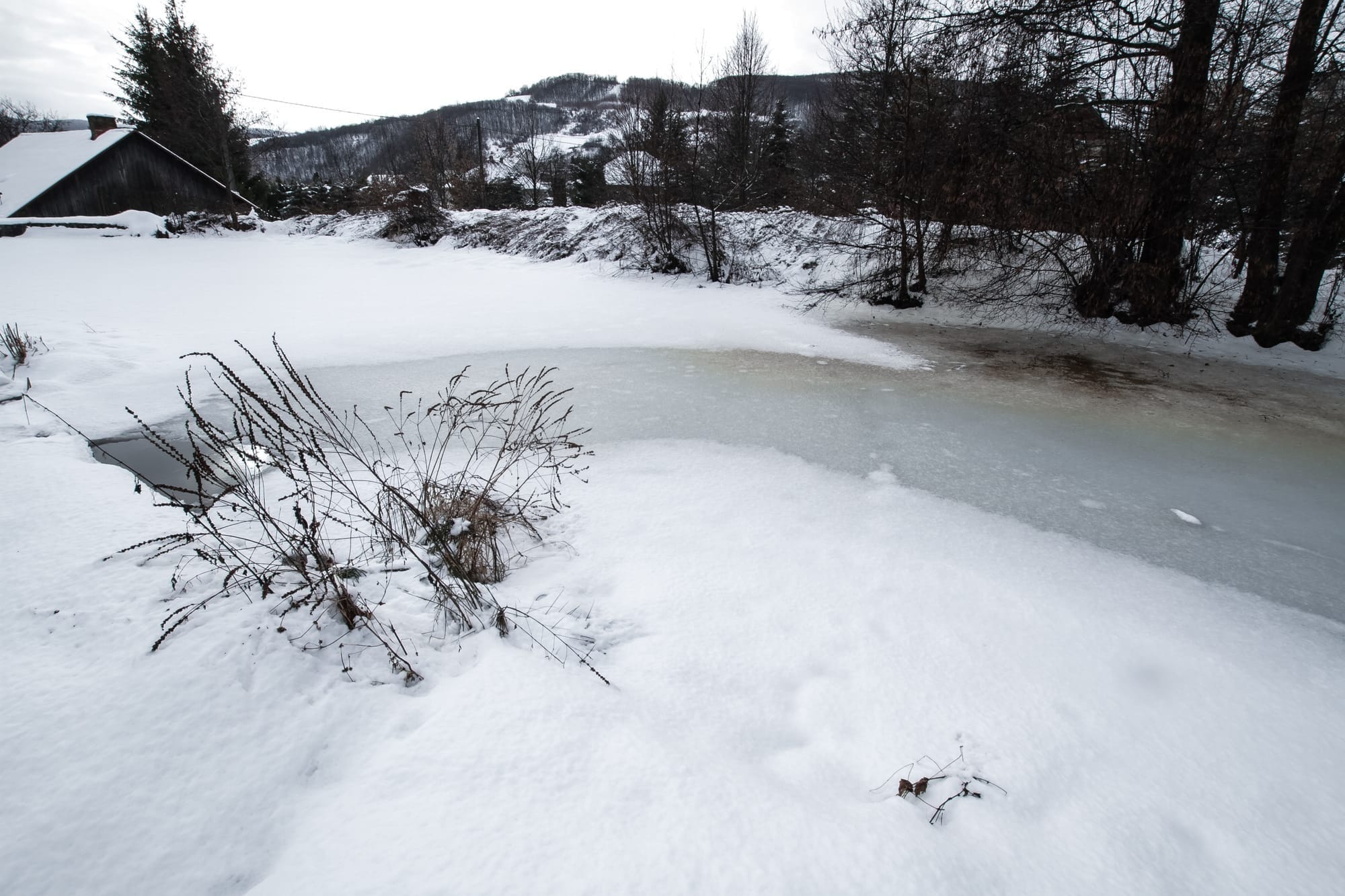
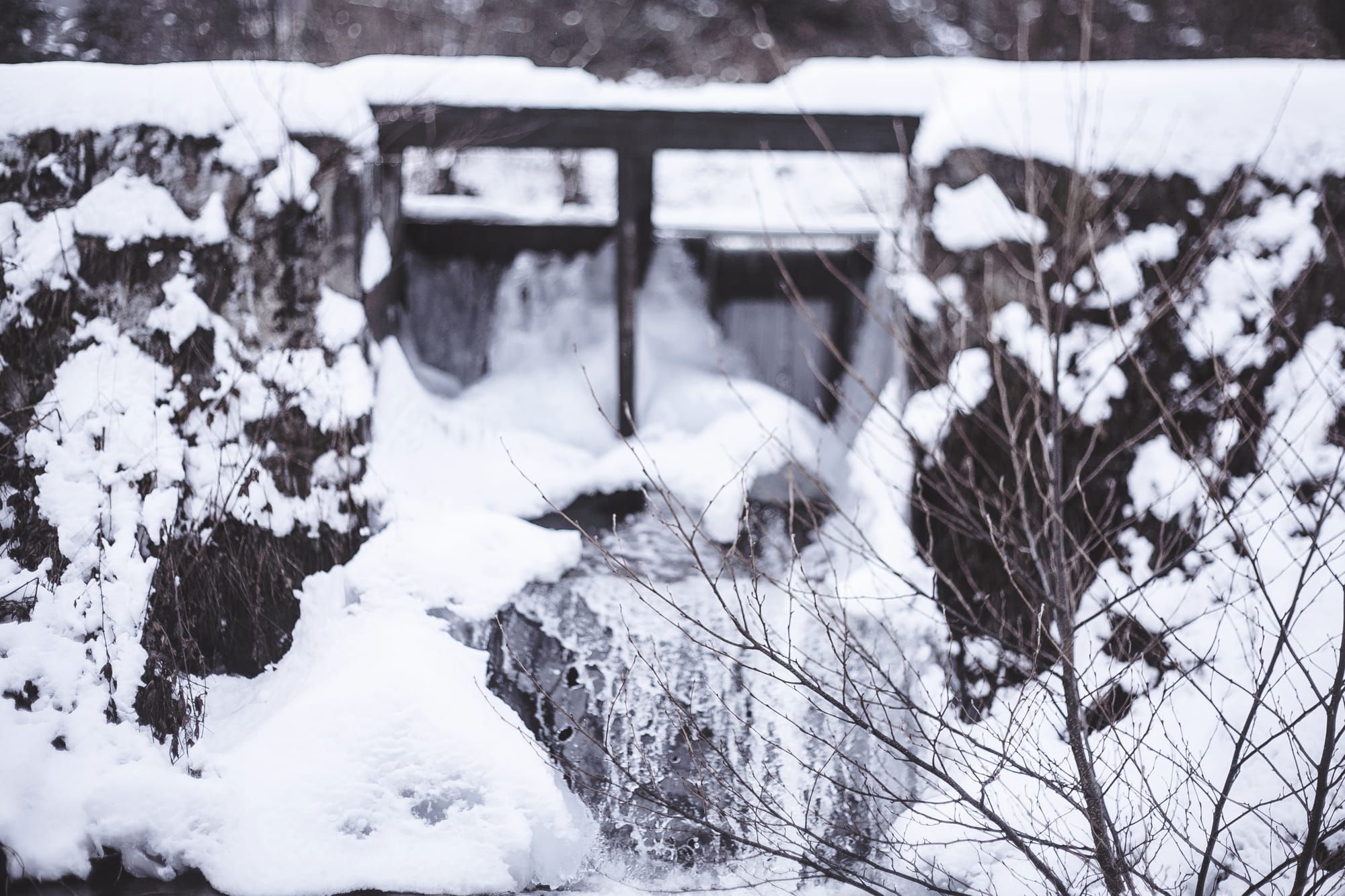
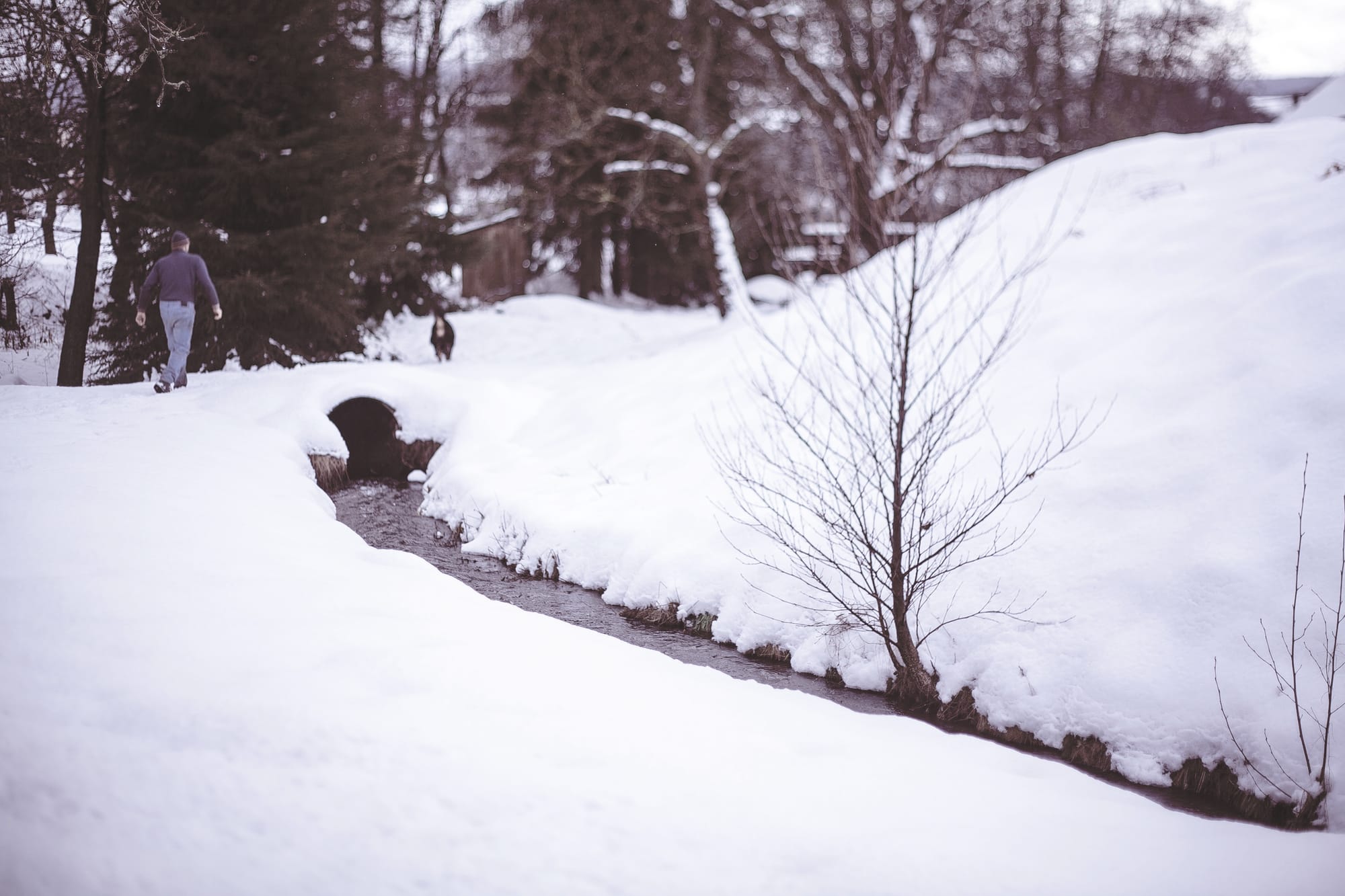
We arrived at Mr. Brostl’s hammer mill in Nižný Medzev in winter. The village is as old as the archaic German dialect that still survives here. The stream flowing from the reservoir above the mill lay beneath a cover of snow, almost frozen. The water surface was frozen too, as was the roof of the mill. Only the path leading to the door had been freshly cleared.
Mr. Brostl was waiting for us by the gate.
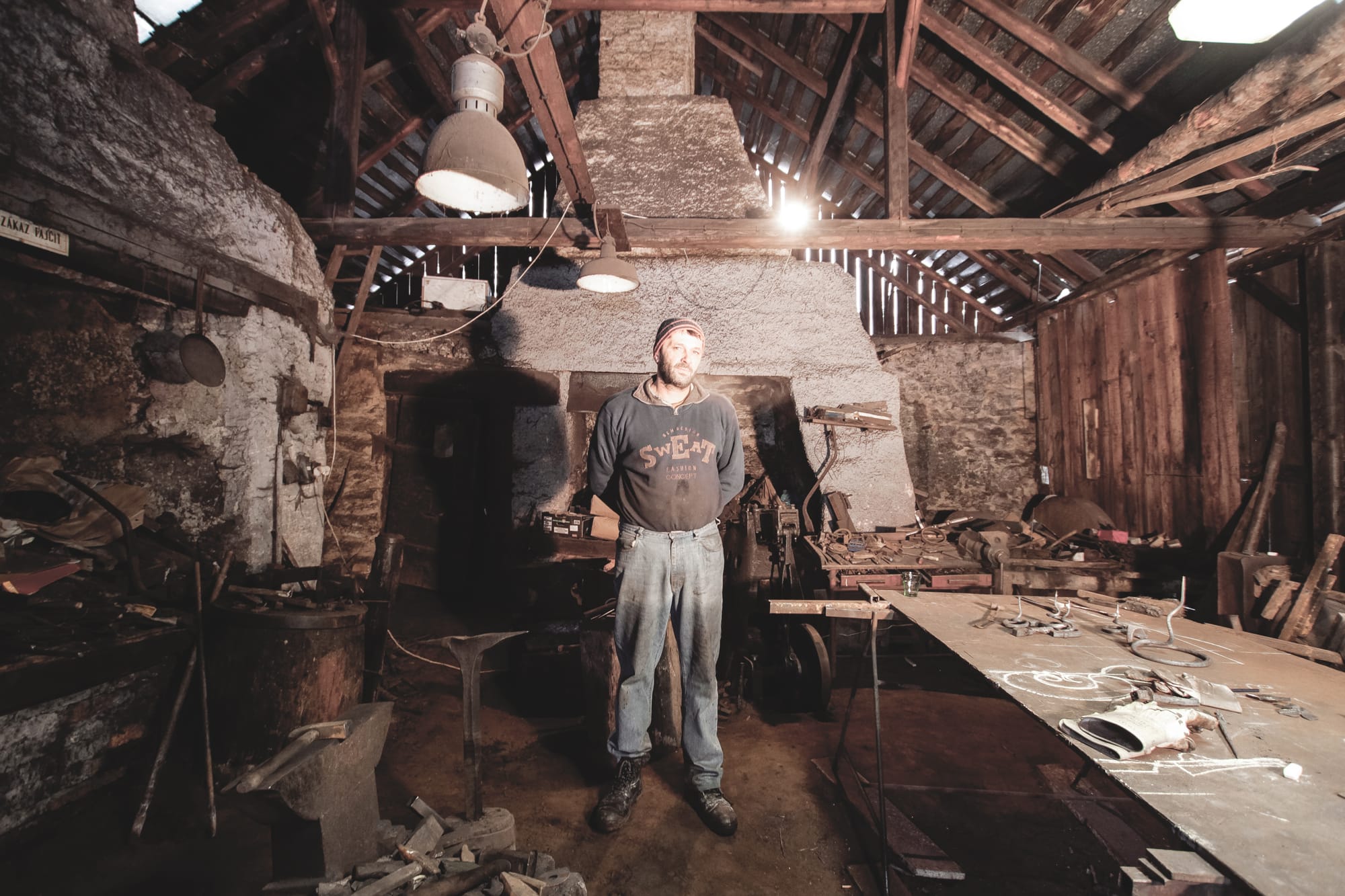
The first thing that struck me upon entering the water-powered hammer was not the machinery, but the smells. The scent of cold iron and sour coal ash mingled with the aroma of a damp, beaten earthen floor, worn over centuries.
In the dim light and silence, the forge – with its two black hearths and iron tools scattered everywhere – seemed motionless. The cold air, extinguished fires, and centuries-old machinery gave us the feeling that time had stood still long ago. It was hard to imagine that this place could ever come to life again.
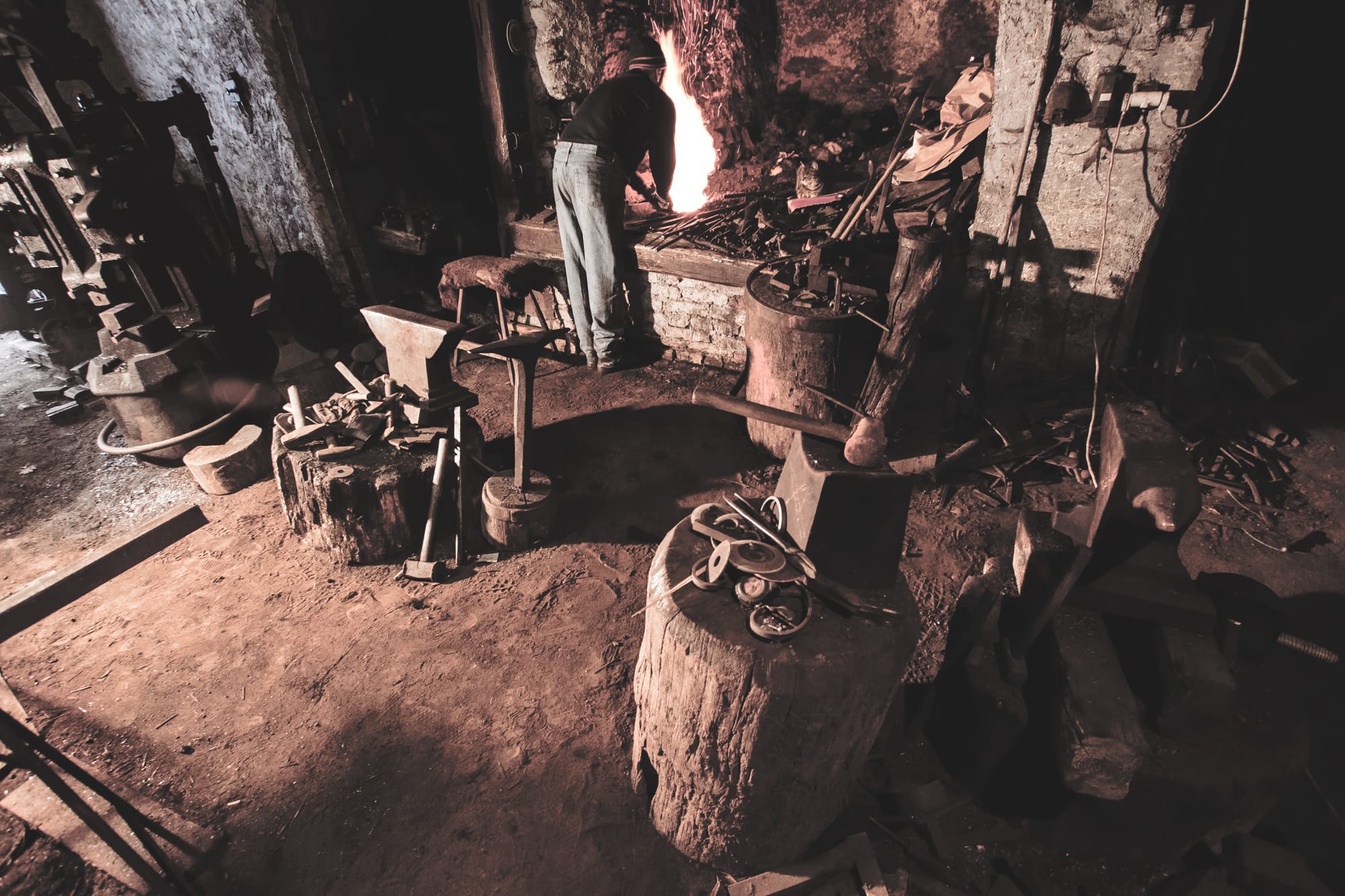
Everything changed the moment the blacksmith lit the fire.
The fire altered the mood, bringing movement and warmth. The water-powered hammer came alive. We sat down for coffee and, using Medzev iron tongs—which have been used here for generations to roast bacon—we cooked ham and eggs. The cold smells definitely gave way to the aroma of food, coffee, and the blacksmith’s cigarette. Over the meal, he told us the history of the place and the story of his family. He spoke of his great-grandfather who had once bought the hammer, of his own daily work at the factory in town, and of his children, who know this place intimately, though their lives are already heading elsewhere.
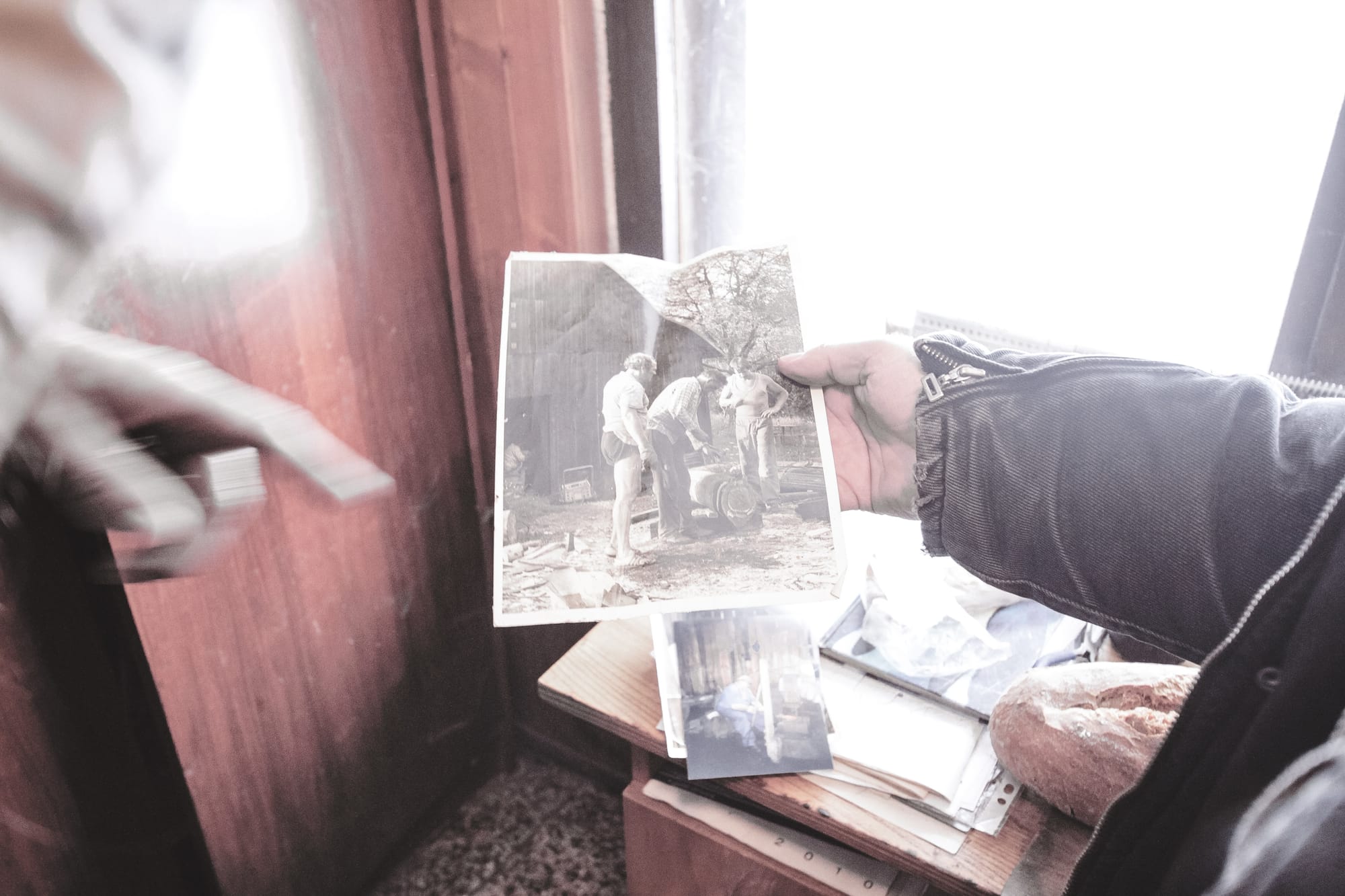
“This water-powered hammer is about four hundred years old today. My grandfather, along with his brother-in-law, bought it in 1936. Both were blacksmiths. Grandfather was born in 1900. He became a blacksmith as a fourteen-year-old boy and stayed with the trade until he was eighty-four. He worked in this hammer for forty-eight years, with the exception of five years spent doing forced labor in the Soviet Union, where the Russians deported him in February 1945 as an ethnic German.
His partner and brother-in-law was less fortunate. After the war, he was sent to clear mines in the Dukla Pass. He never returned to the hammer.”
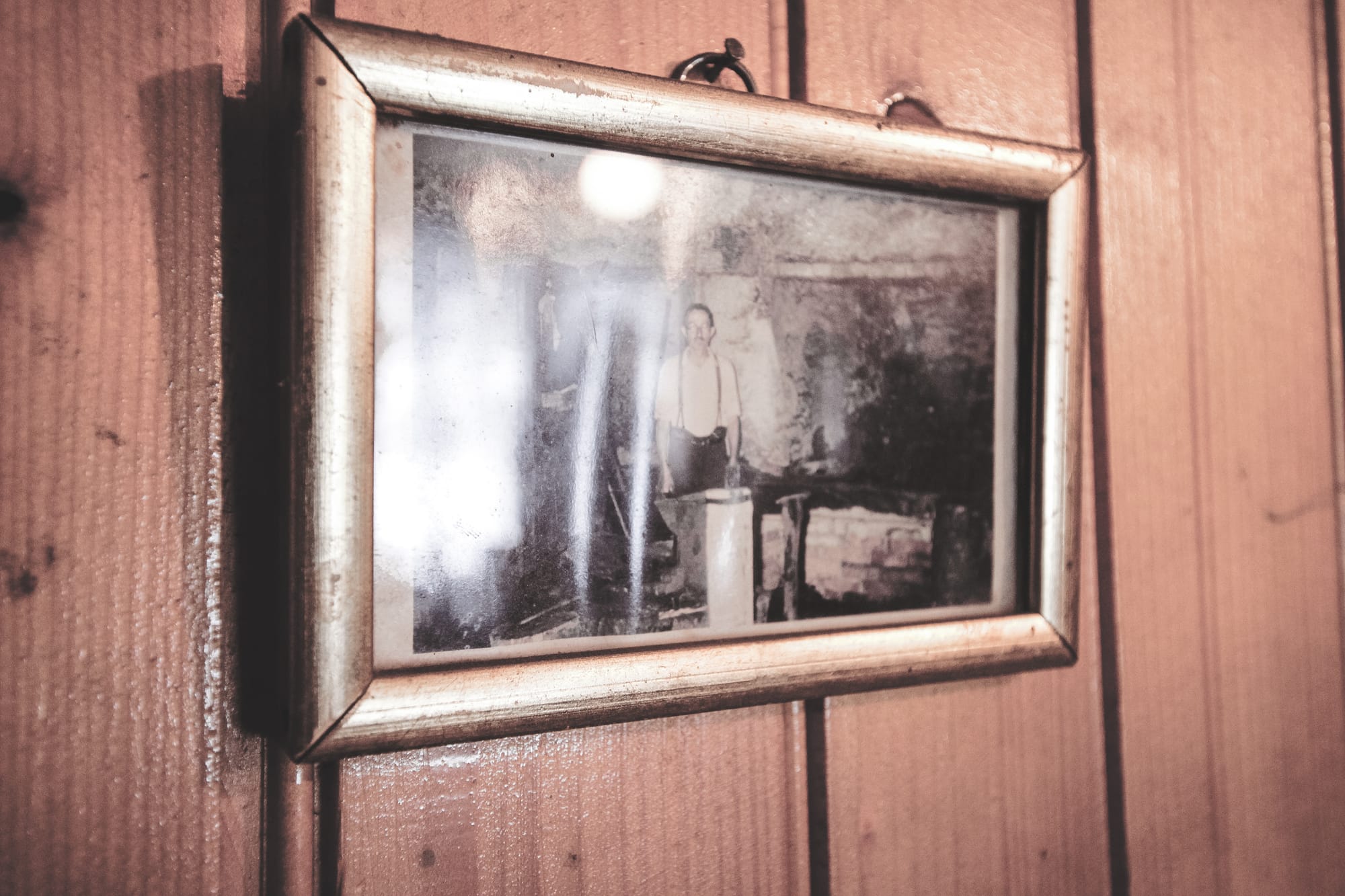
During the peak boom at the end of the 19th and beginning of the 20th century, 106 water-powered hammers with nearly two hundred hearths operated in Medzev. In the Goldseifen valley, where Mr. Brostl’s hammer also stands, there were twenty-seven of them. All were powered by a single stream. The amount of energy available to each hammer depended on the size of its water reservoir—its tajch—and the volume of water it could retain. Water was scarce, and every single drop had to be utilized. Therefore, the hammers did not start working all at once. First, they released the water at the highest-positioned hammer. When the current reached lower down, the next ones could begin their work. In this way, the water gradually descended the valley from one hammer to another.
“When they started forging up above, we knew that the water would reach us in a moment.”
Where the flow was smaller, lighter tools were manufactured – hoes, mattocks, and gardening implements. Hammers with a larger supply of water could afford to forge heavier products, such as shovels, spades, or plowshares.
Finally, he began to speak of the sound that used to fill the Goldseifen valley every morning. First, the power hammer could be heard at the highest-positioned forge. Then another. And another. The sound of hammers and anvils advanced down the valley along with the water, from one hammer to the next.
When he began to work, the conversation had to end.
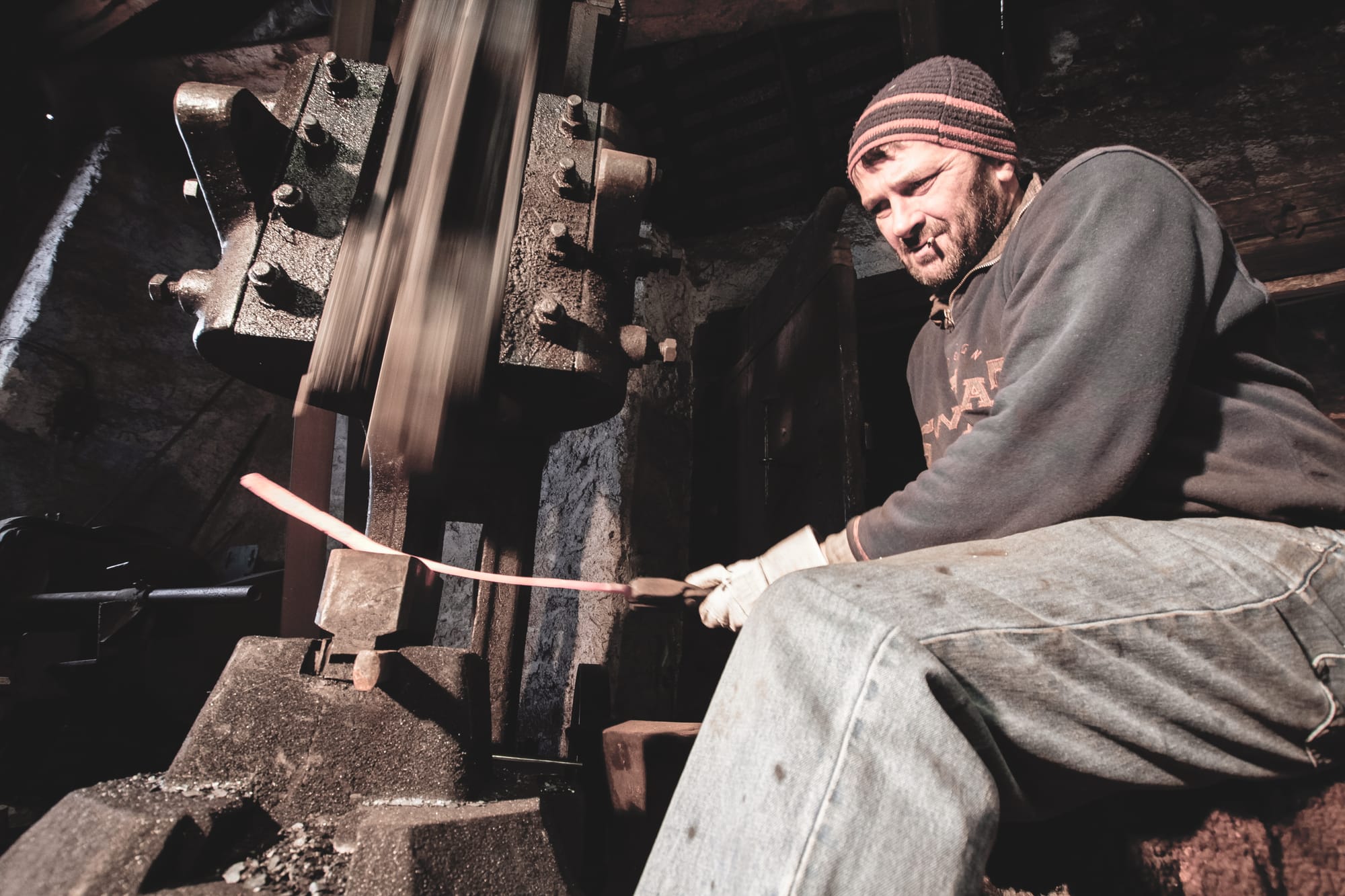
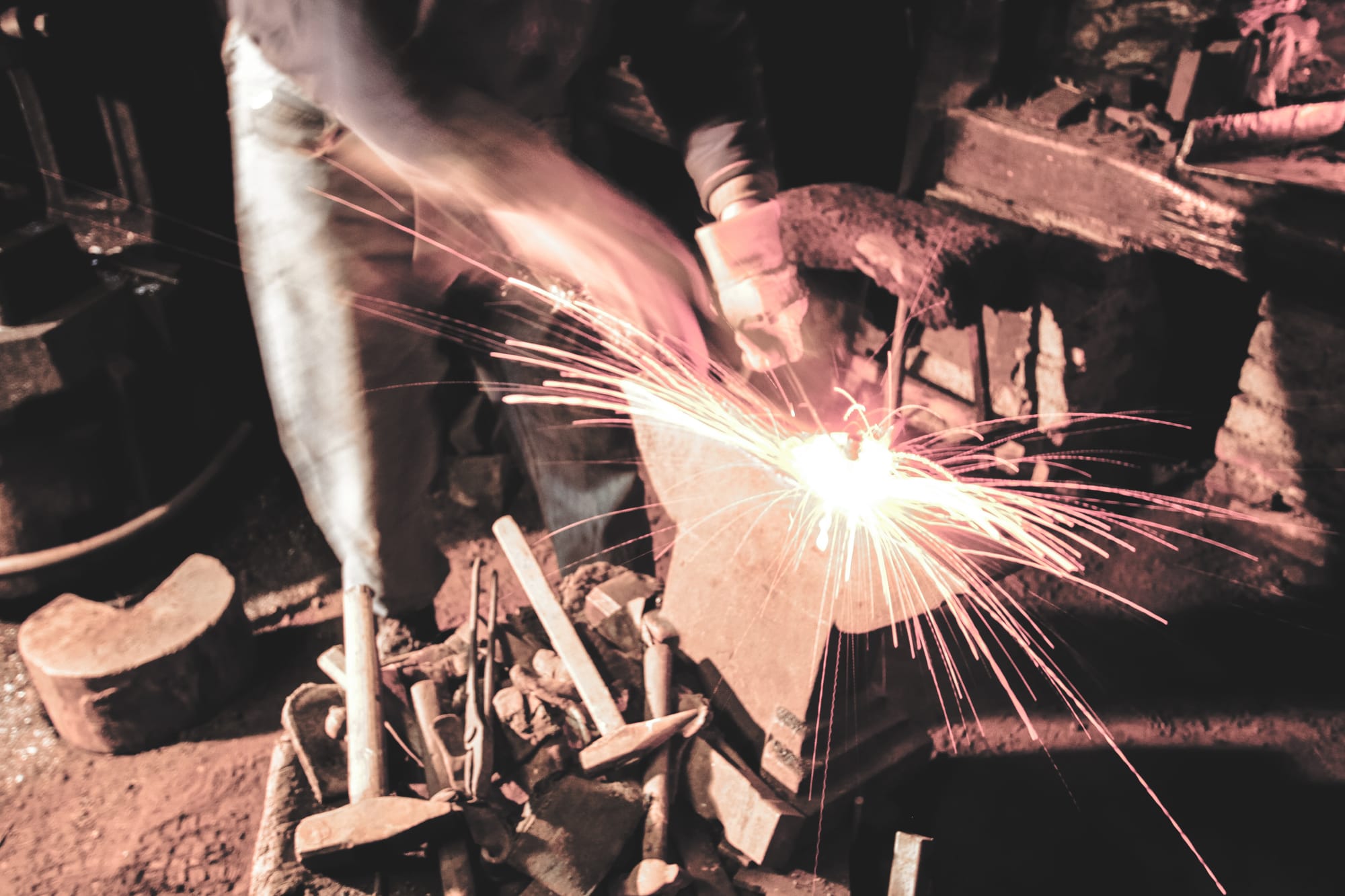
The thumping of the massive water-powered hammer made speech impossible; only observation remained. We watched as a spade took shape beneath his hands. He forges it from a single piece of iron, with precise rhythm, quiet concentration, and humility. “Our final operation is compacting the tool under the power hammer at a temperature of just 200°C. This air hardening gives the tool properties that cannot be achieved any other way.
“People know what a high-quality computer or car is, but it seems that the relationship with a high-quality tool for working the soil has been lost.” My grandfather from Tvrdomestice would not have been surprised. "Shit tools, shit work," he used to say — and Mr. Brostl, without knowing it, had just said the same thing in different words.
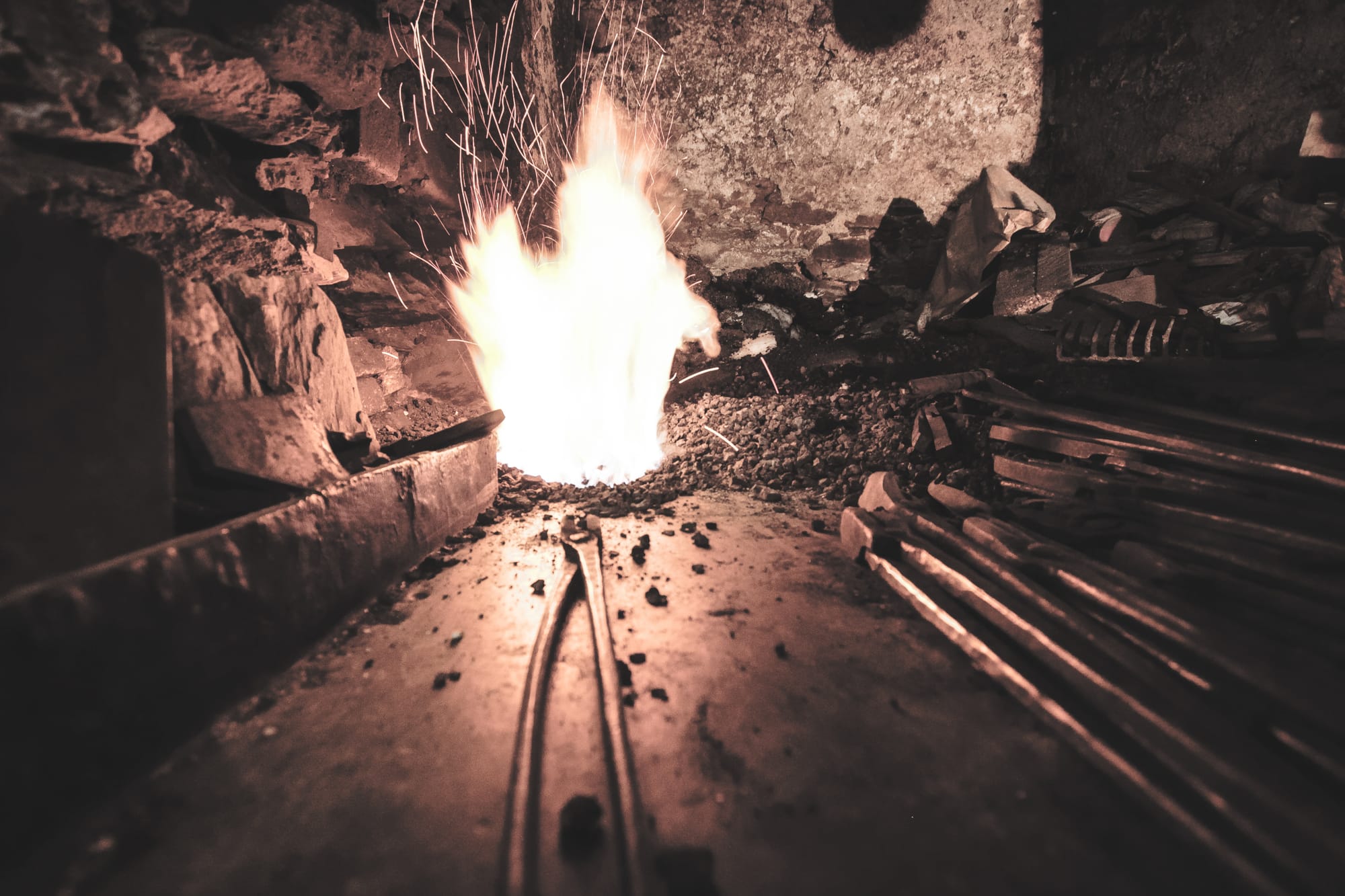
Forged tools—those spades, hoes, and shovels—were the reason the water-powered hammers prospered for centuries. And at the same time, they are the reason why they almost vanished. Competing with mass-produced tools, stamped out of sheet metal without forging or hardening, was impossible. Today, most of the hammers are either technical monuments or ruins.
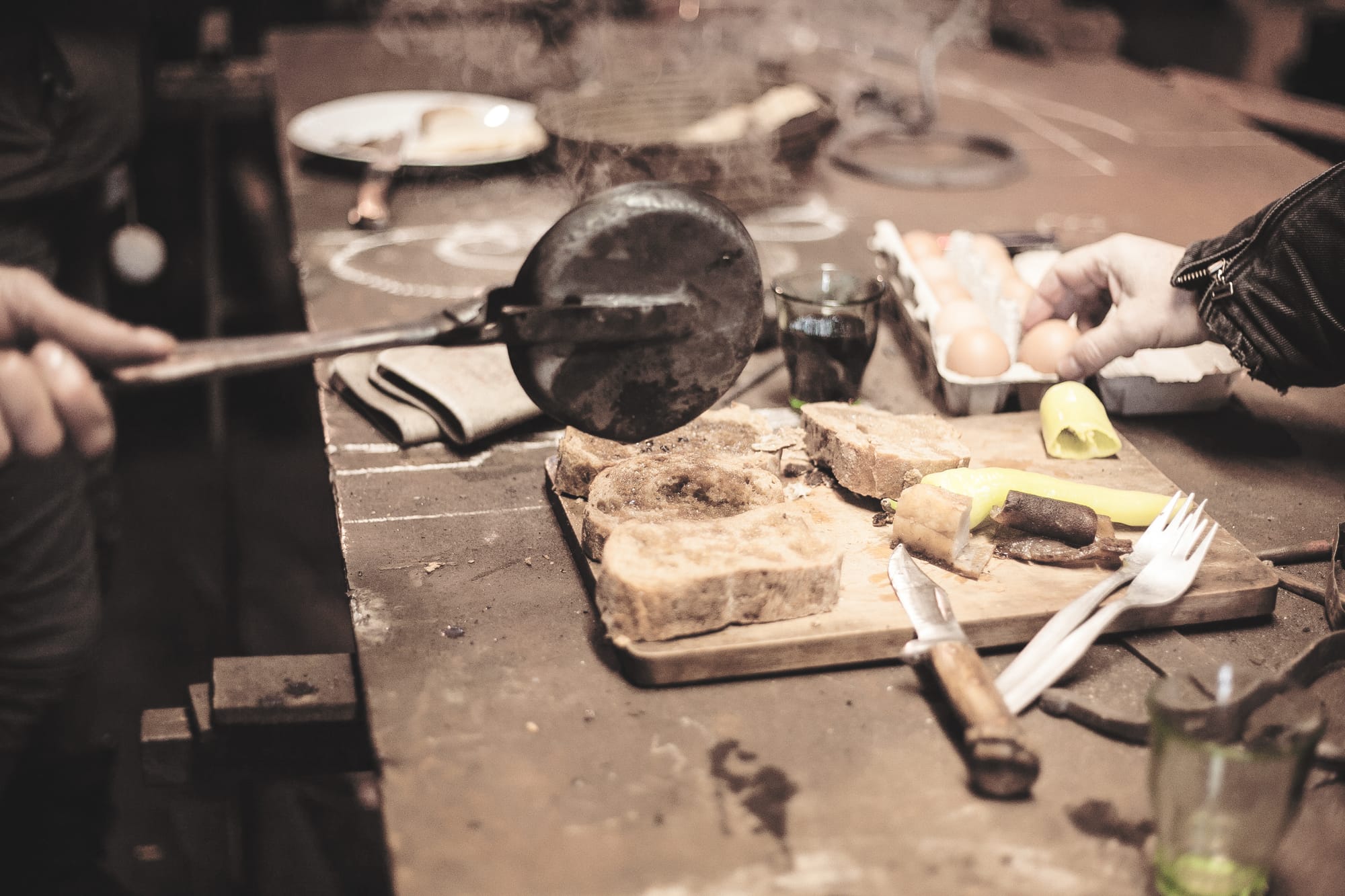
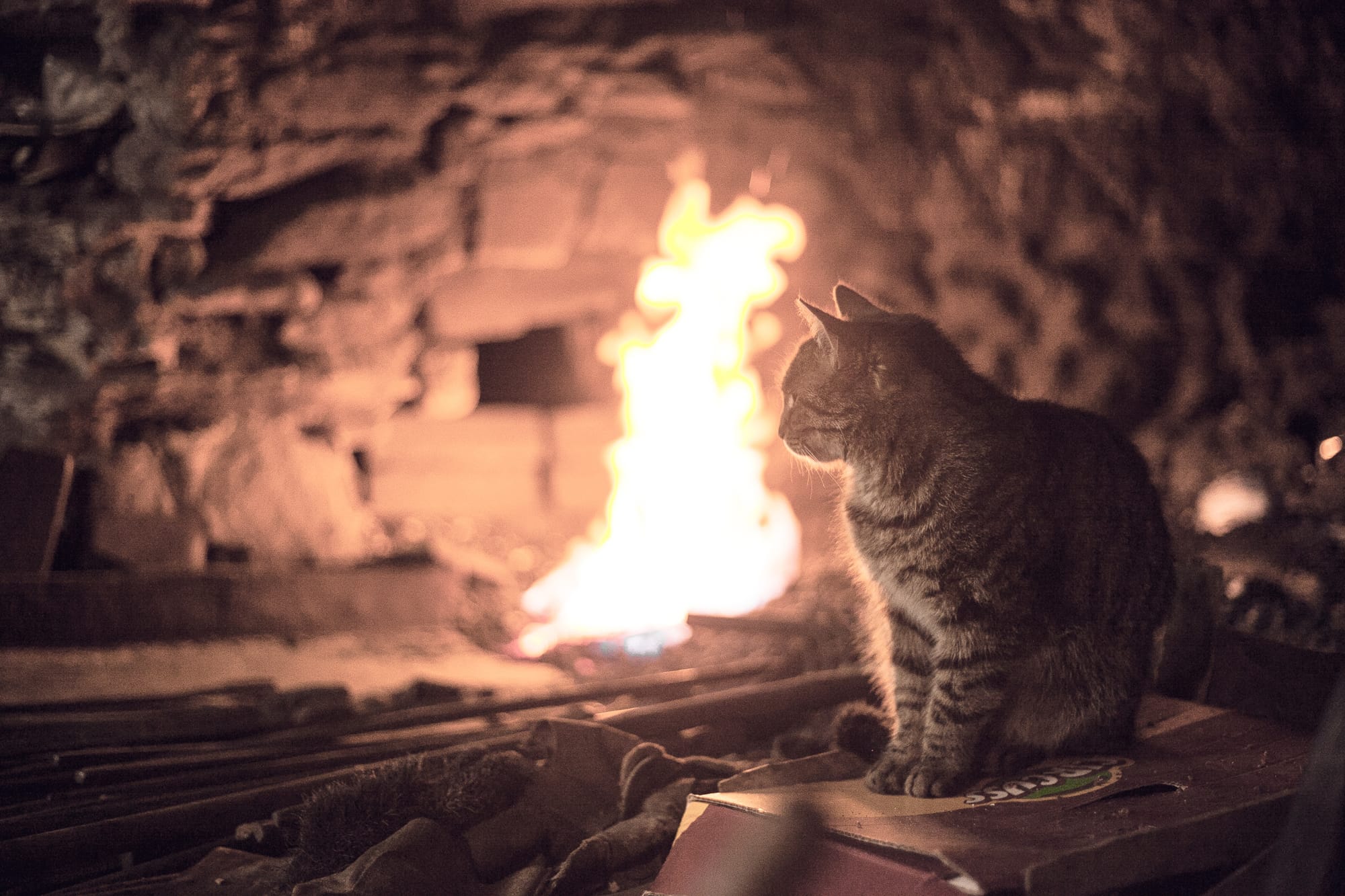
“Since 1990, we had built a stable clientele, and they would snap up our products straight out of the forge. Until 2005, this hammer supported seven families. Today, I am here alone, and I’ve had to take on another job as well.”
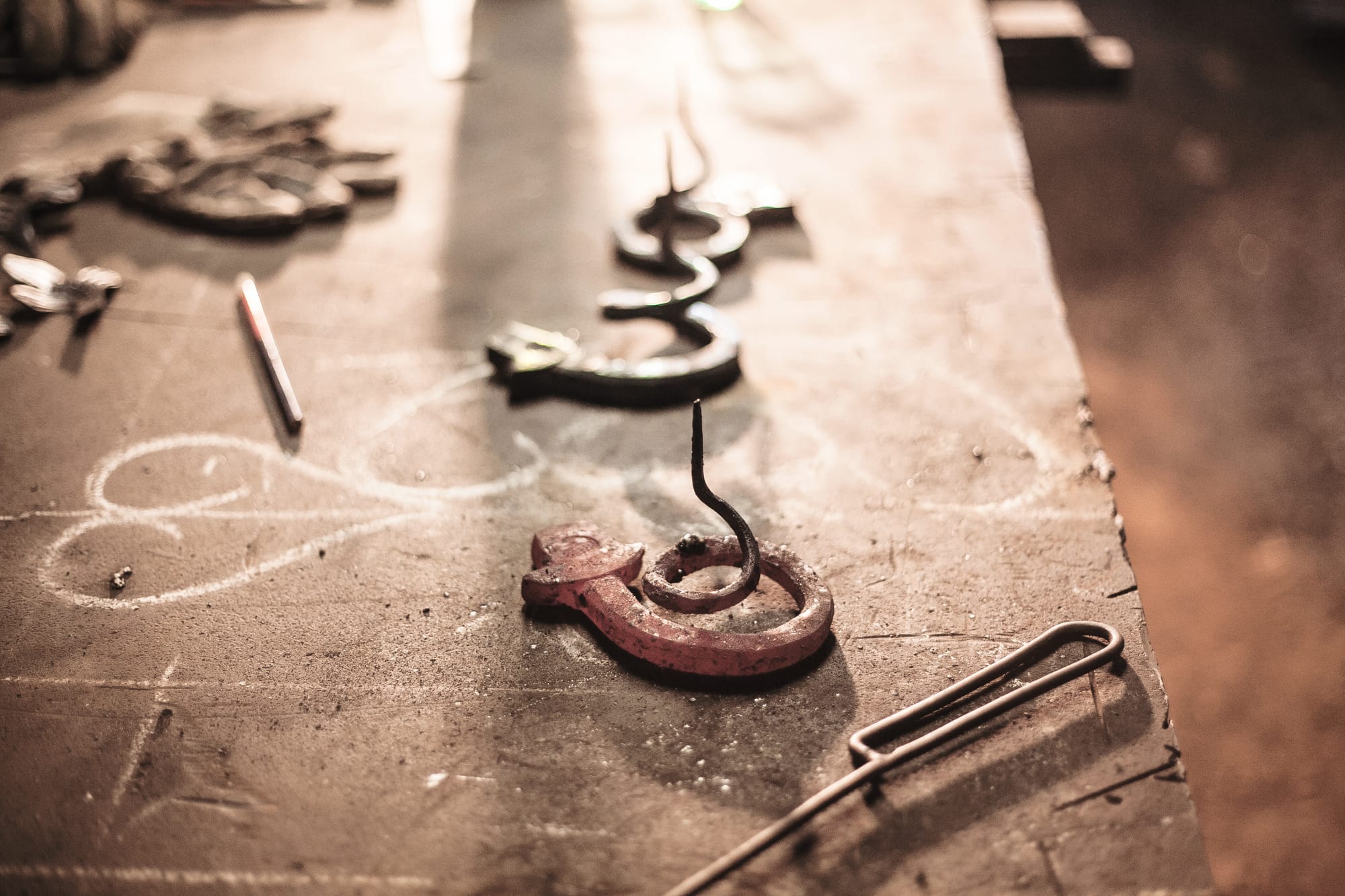
When he later stamped the family emblem “B” into the still-hot iron with satisfaction, it was clear that his bond to this place remained just as strong as it had been in his father and grandfather. Thanks to him, the Brostl hammer still lives. The fire still burns here, the hammer still thumps, and the bacon still roasts.
Text: Vladimír Jenčurák, Photo: Tereza Sejková, Naty Ščamborová