The Sky Above a Stateless Nation
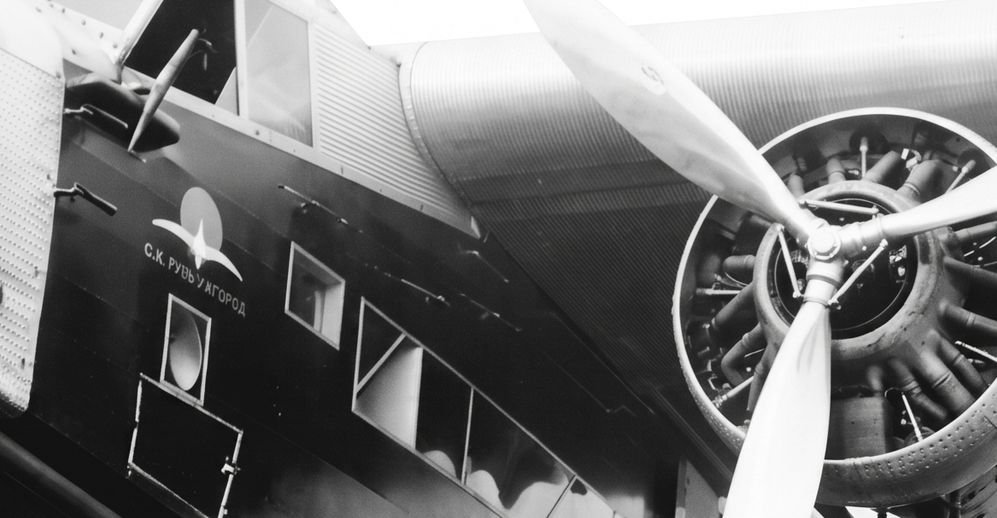
The Flying Teachers of Uzhhorod
Long before commercial airlines connected Europe, a football club from Europe's forgotten edge found a way to fly.
Imagine a journey from Uzhhorod to Prague in the mid-1930s. By train, it would take an entire day. For a football club from Subcarpathian Rus, that meant leaving home on Friday and returning only after the weekend. For professional athletes, perhaps an inconvenience. For teachers, a problem.
The players of ŠK Rusj Uzhhorod were not professionals. During the week, they stood in front of blackboards in schools scattered across the region. They taught children how to read, write, and count. Classes continued until noon on Saturdays. On Monday morning, they had to be back again.
And so something unusual happened.
They began to fly.
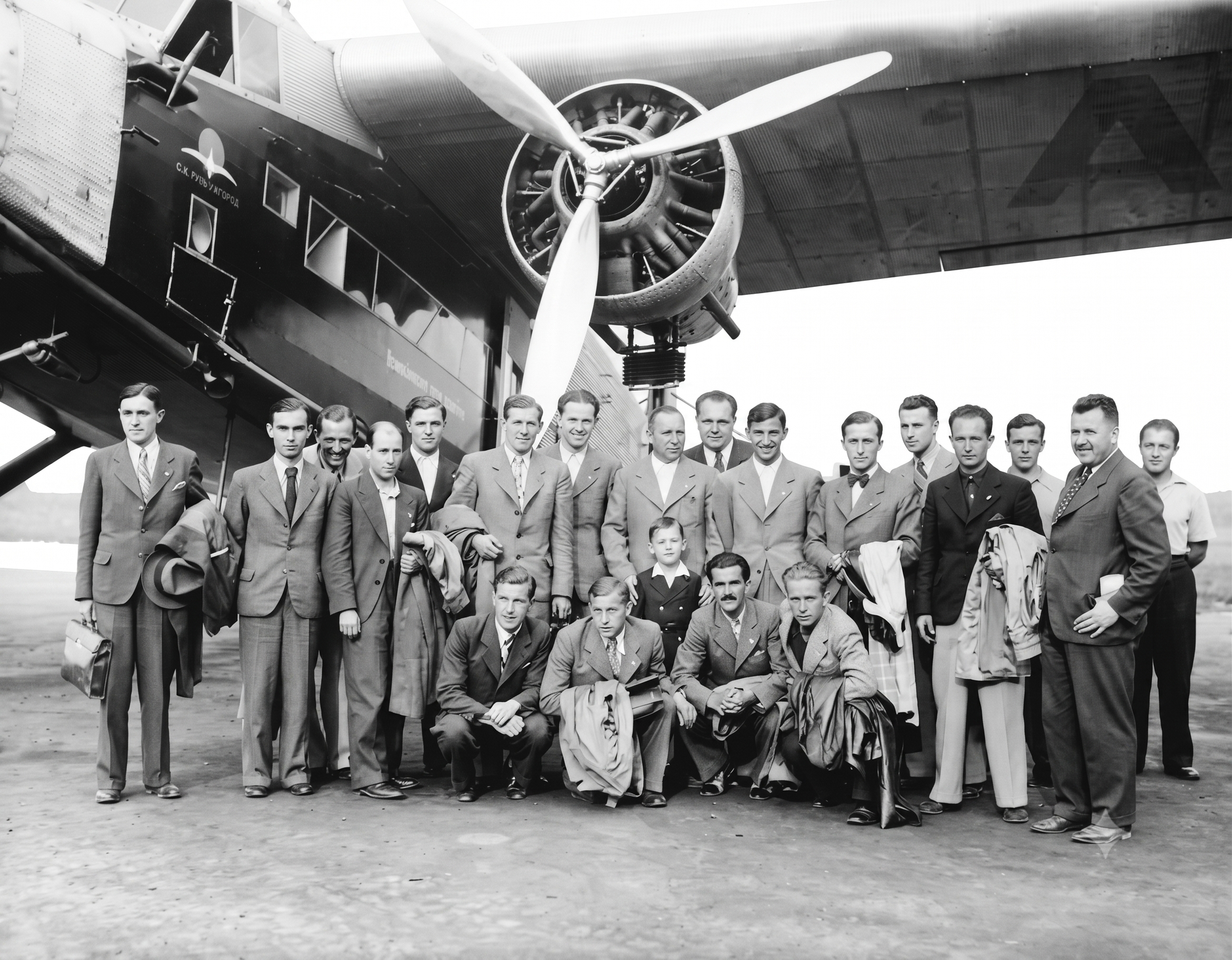
In the surviving photographs, they stand beside an Avia F-VIIb/3m, the Czechoslovak version of the famous Dutch Fokker F.VII airliner. They do not look like sports stars. They wear neither club jackets nor representative blazers. They wear suits. Ties. Hats. If you did not know their story, you would hardly guess that within a few hours they would be facing Sparta Prague or Slavia Prague.
That is the paradox at the heart of their story.
In 1930s Europe, flying was a symbol of the future. It belonged to pilots, industrialists, adventurers, and wealthy travellers. In Subcarpathian Rus, however, it was teachers who boarded airplanes.
Men from villages and small towns beneath the Carpathians.
Not because they could afford to. But because they could not afford not to.
If a club from the easternmost corner of the republic wanted to compete at the highest level, it had to overcome distances that most of its rivals never experienced. The airplane was not a luxury. It was a solution to geography.
For the Carpathian Rusyns, however, ŠK Rusj Uzhhorod meant more than a football club.
Interwar Uzhhorod already had Hungarian, Czech, and Jewish sports clubs. Rusj was founded last. Yet it went furthest. It became the first club from Subcarpathian Rus to reach the top tier of Czechoslovak football.
There were undoubtedly many reasons for this. Talent. Organisation. Favourable circumstances. Looking at the roster, however, another explanation suggests itself.
The core of the team consisted of teachers.
They belonged to a generation of educated Rusyns that came of age at a time when modern schools, associations, and cultural institutions were taking shape in Subcarpathian Rus. Education gave them more than knowledge. It also gave them a sense of belonging.
In the 1930s, the Rusyns had no state of their own. They had no ministries, no army, and no diplomats. What they did have were schools, churches, newspapers, choirs, reading societies, and sports clubs.
And they had Rusj.
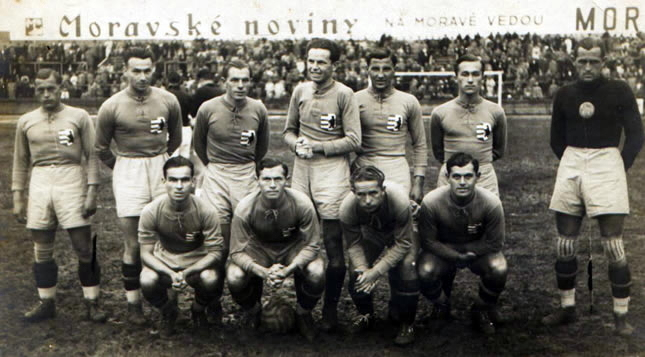
When the club faced Sparta, Slavia, or Viktoria Plzeň, it represented more than eleven players on a football pitch. For many Rusyns, it became proof that a community from the republic's far eastern edge could stand alongside the very best.
Perhaps this is where the answer lies to why the story of the Flying Teachers has endured.
Not because they flew.
Not because they played football.
But because they brought together two things that rarely met in Subcarpathian Rus at the time: education and identity.
Education gave them the skills.
Identity gave them a reason.
And from their combination grew the motivation to achieve goals that others might have considered unattainable.
Today, our eyes are first drawn to the airplane in the photographs. It is large, gleaming, and embodies the technology of its age. Yet after a moment, one realizes that the most interesting subject in the frame is not the Avia F-VIIb/3m.
It is the people standing beside it.
Teachers from Uzhhorod, Mukachevo, Khust, and other towns of Subcarpathian Rus. Men who spent their weekdays teaching children in classrooms and their weekends competing against the best football clubs in the country.
The club disappeared after the war. What remains are a handful of photographs, a few newspaper reports, and several badges that still surface in family archives from Uzhhorod to Pittsburgh.
And that is enough.
Not to create a legend.
But to remember a generation.
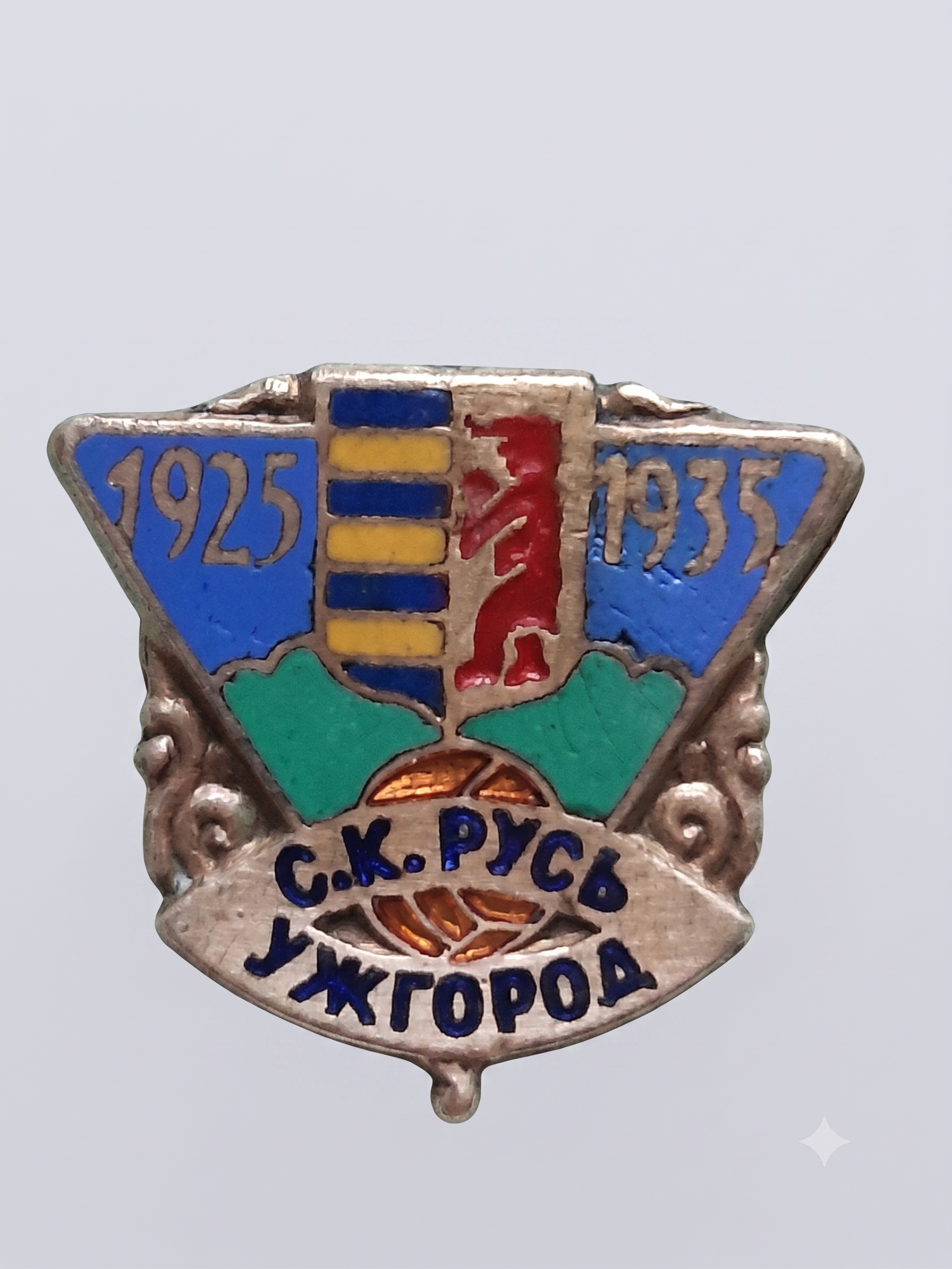
A generation of educated Rusyns that showed what can emerge when ability meets motivation, and when identity becomes a source of energy rather than a boundary.
In one photograph, they stand before an airplane in suits and ties. In another, they pose in blue shirts bearing the coat of arms of Subcarpathian Rus.
And when we look at these images today, we do not see only a football team.
We see people of whom their community can be quietly proud.
Text: Vladimír Jenčurák
Photo: Czech historical press archives (1930s). Unknown photographer. Colorized by AI.