Where Is the Sound of Our Time?
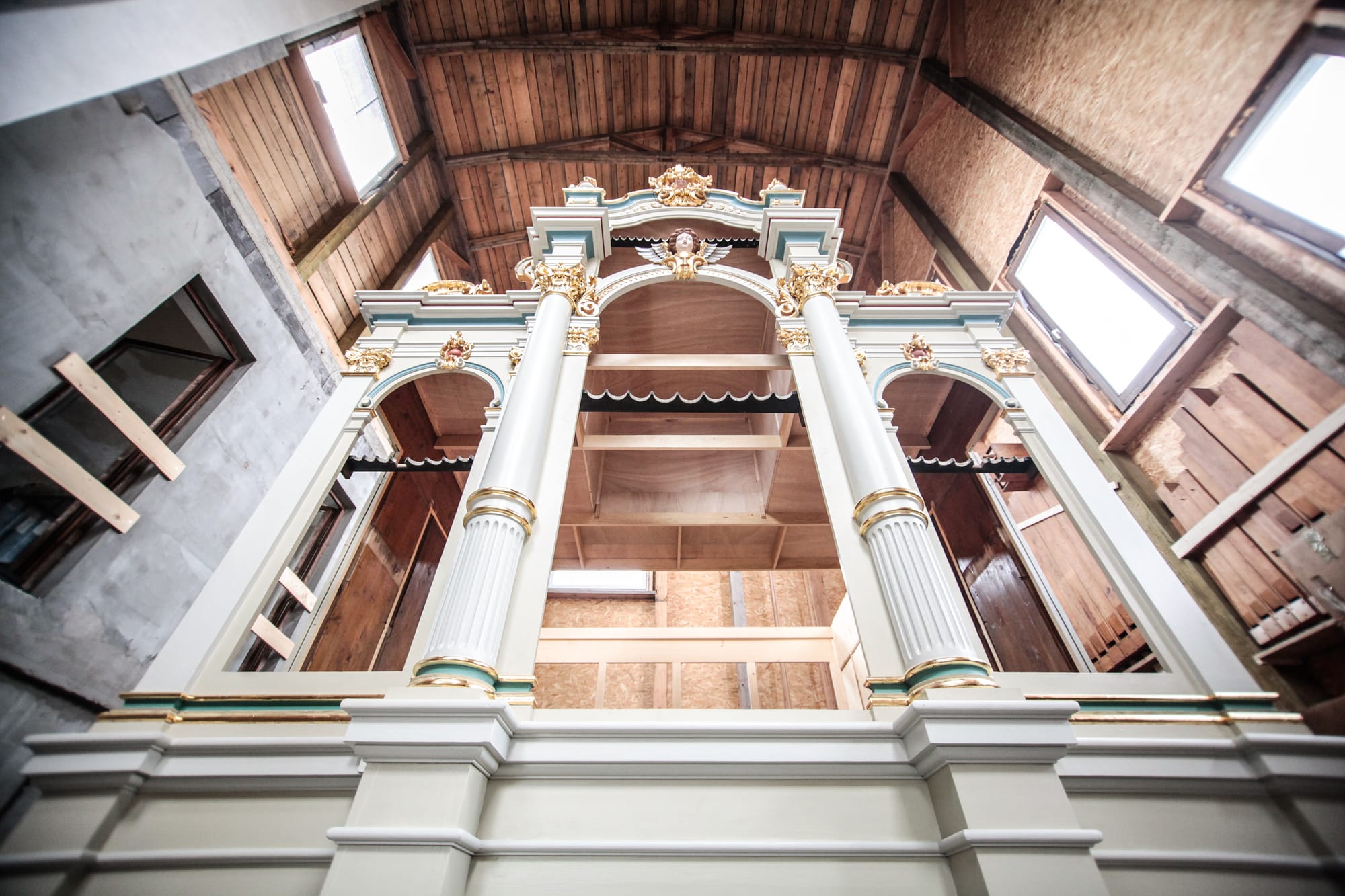
Before an organ can fill a church with sound, someone must teach it how to speak.
It is in the voicing room of the BIES organ workshop in Hranovnica that an instrument’s final voice takes shape. This is where decisions are made about which tones will come forward and which will remain in the background.
“Every fundamental tone consists of a multitude of overtones. My task, by adjusting the pipe, is to bring some forward and suppress others,” says Gabriel Bies.
Behind this simple sentence lie decades of work with a material that demands patience, experience, and the ability to hear distinctions that most people will never perceive.
Organ building is one of the crafts that has deep roots in the Spiš region. When the organ builder Jakub Koffenberg was active in the mid-17th century, the region was a network of multilingual towns known by their German names, such as Kesmark, Leutschau, and Wallendorf. In the 19th century, prominent Spiš organ builders included Jozef Demeter of Schwedler and Pavol Herrmann of Kesmark.
Yet this was more than the history of a single craft. Organ building emerged in an environment where different languages, cultures, and religious traditions intersected. For centuries, Spiš was shaped by migration, cultural exchange, and layers of memory.
In the second half of the 20th century, however, organ building in Slovakia nearly disappeared. Decades of communist rule interrupted the continuity of many crafts connected with the Church. After 1989, the situation began to change. Religious life was restored, churches were renovated, new parishes emerged, and with them came the need for new instruments.
It was during this period that the brothers Ján and Gabriel Bies decided to establish their own workshop dedicated to building and restoring organs. Since 2005, they have worked from a new workshop in Hranovnica, at the foothills of the Tatra Mountains.
It is not a large factory. It is a place where contemporary life meets a craft that demands time.
How Does One Become an Organ Builder?
Ján Bies did not originally come to organs through music. He worked in construction.
“When I got married, there was very little furniture available in shops, and money was tight. My father-in-law had a small carpentry workshop, and that is where I started working with wood.”
Working with timber was the first step toward a craft that would later unite material, mechanics, and sound.
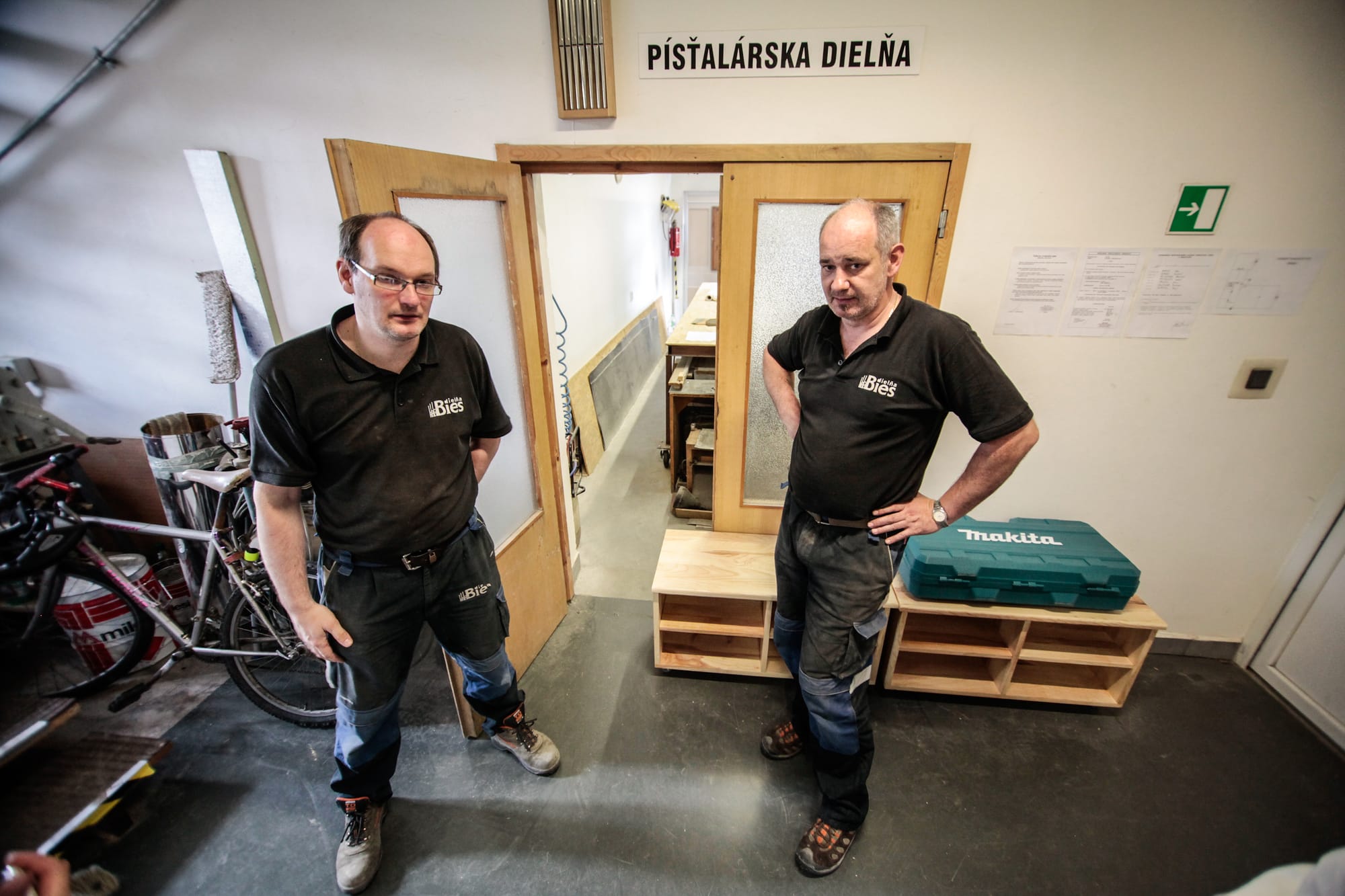
Gabriel Bies took a different path. He was a musician, playing double bass in the State Philharmonic Orchestra in Košice.
“It was not by my own decision. God kept moving me in this direction throughout my entire life. Everything I went through came together in such a way that today, I build organs.”
Yet he never formally studied organ building.
“Everything I know today, I learned through hands-on experience. I went directly to the instrument itself—examining how things were made, thinking about how and why they functioned. To me, that is the best path.”
This sentence also explains the way the brothers approach their work. Not by repeating ready-made procedures, but through constant observation and a search for the connections between the material and the final result.
The brothers were never formally trained in organ building.
“We were even criticised for never having formally trained as organ builders, but today graduates of specialised organ-building schools come to learn from us.”
One Hundred and Fifty Steps to a Single Pipe
Today, eight people work in the Hranovnica workshop. They manufacture most of the instrument’s components themselves—from the wooden elements of the tracker action to the tin pipes.
Pipe making is one of the most demanding aspects of organ building.
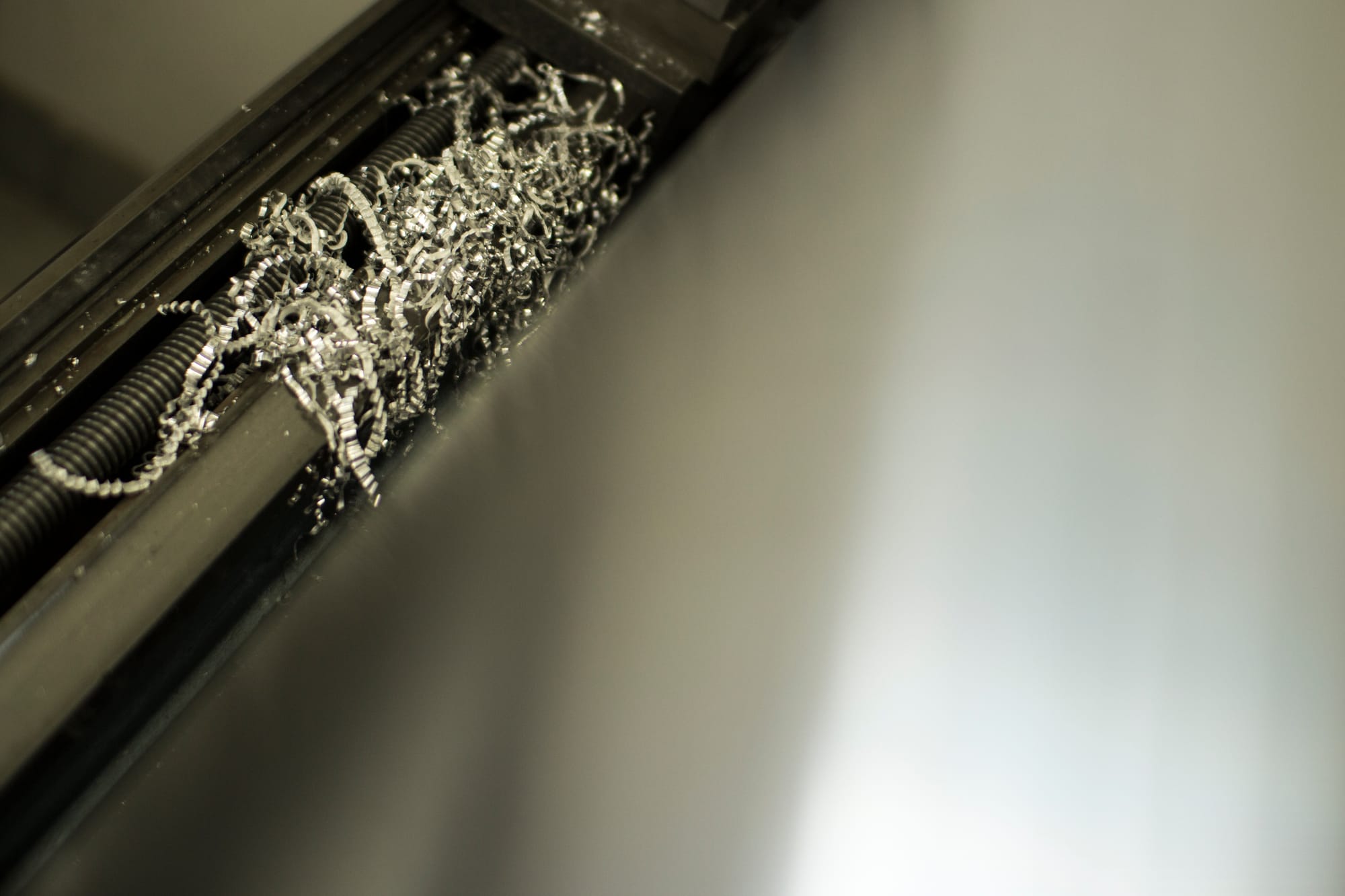
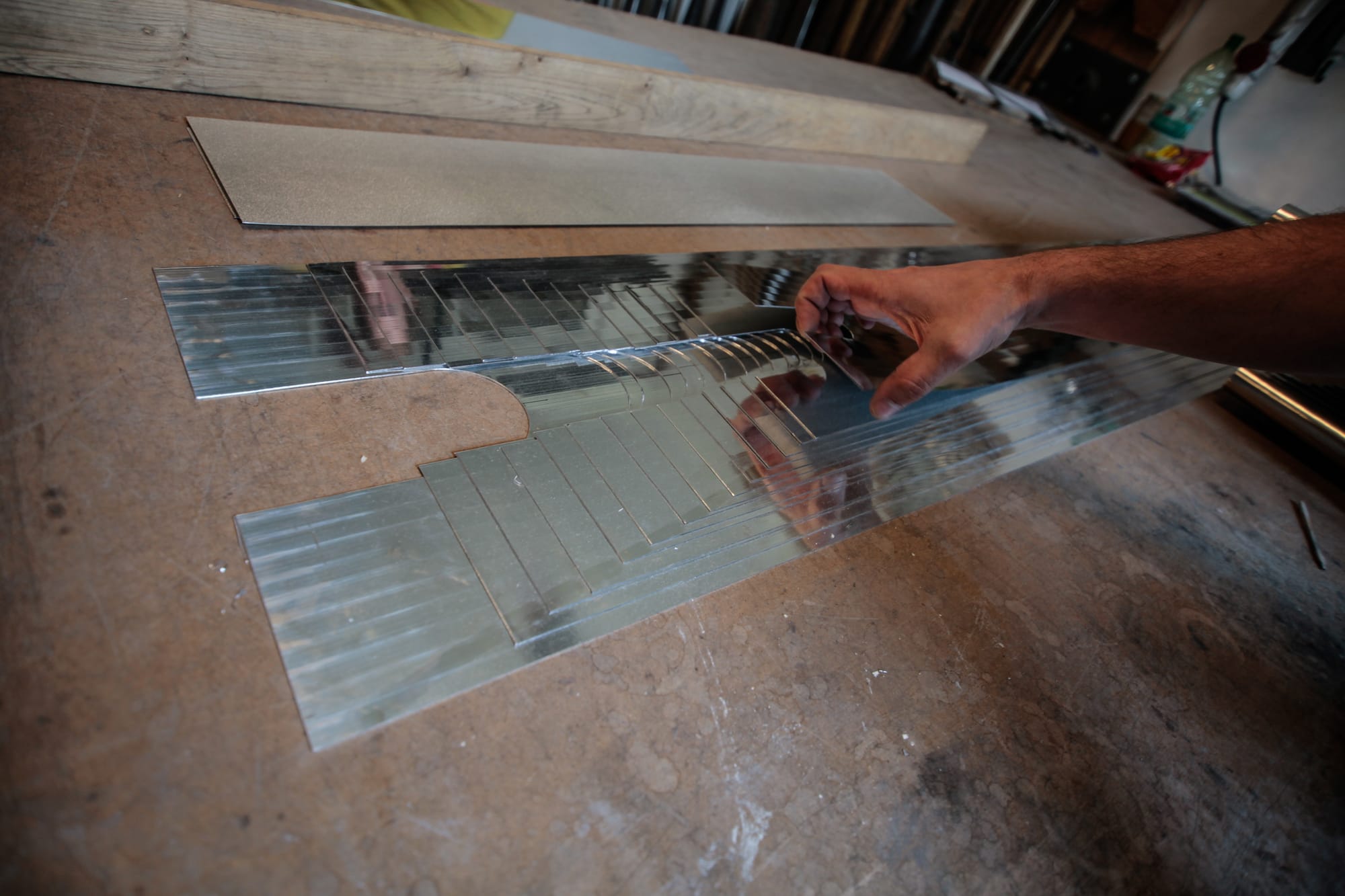
“From an alloy of tin and lead, we cast, roll, and plane sheets of metal from which my nephew, Stanislav Rusnák, then makes the pipes. He is the only person in Slovakia who masters this craft.”
Behind the final shape of a single pipe lies a multitude of small decisions. Its production involves approximately one hundred and fifty individual operations.
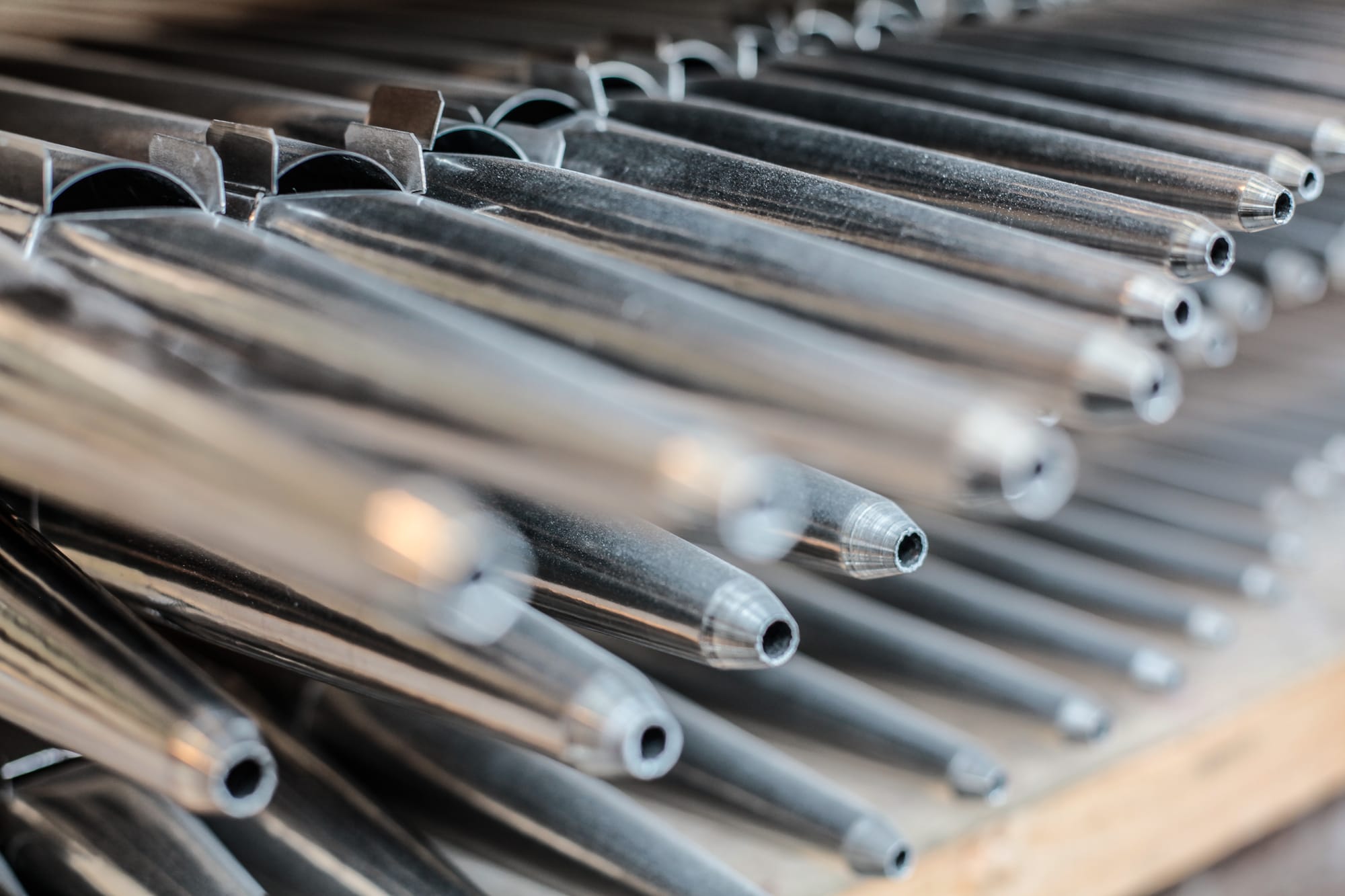
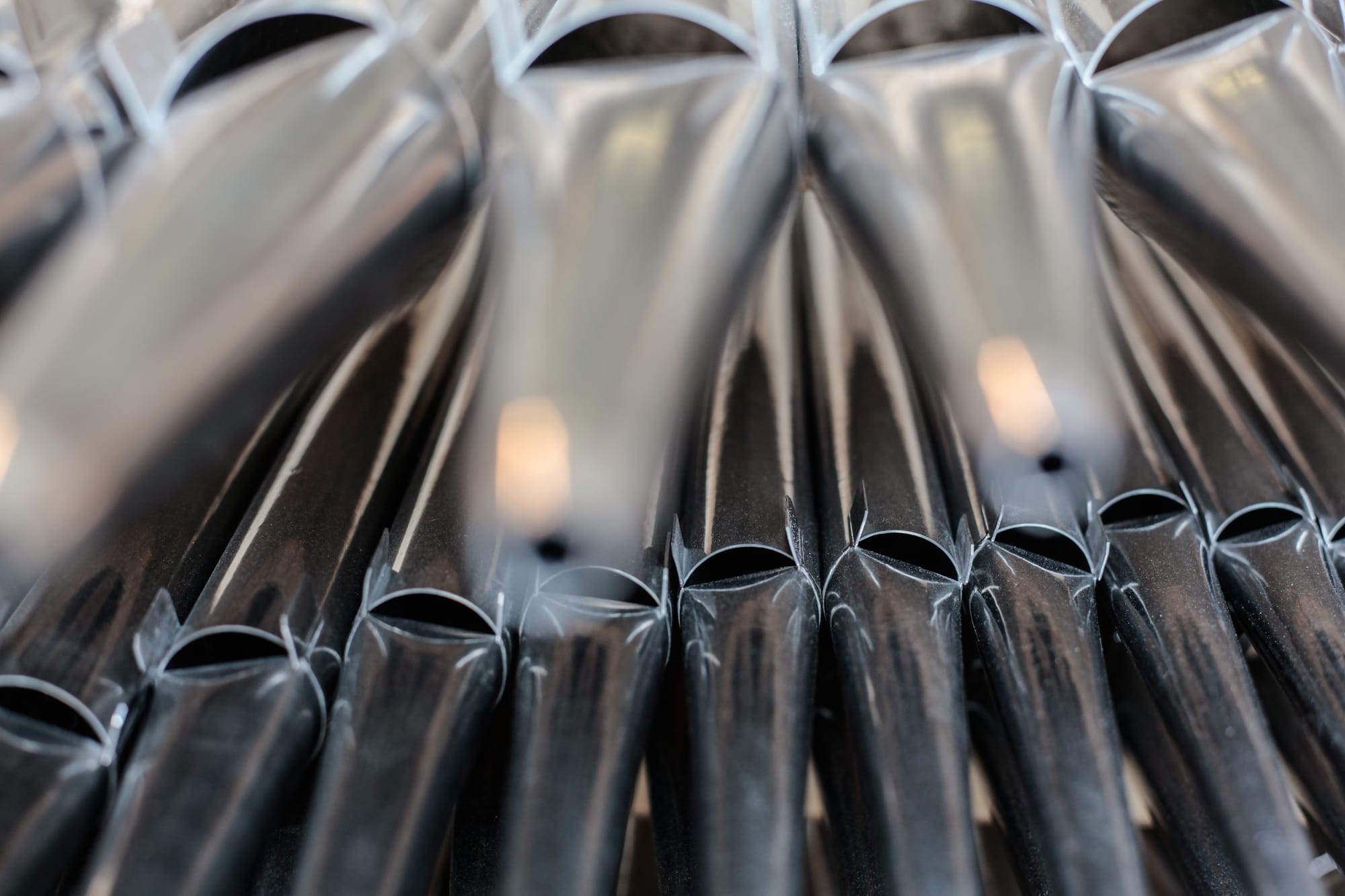
“Above all, it requires patience and precision.”
In organ building, no material is merely a structural component. Every piece of wood, every metal element, and every detail of the mechanism influences the final instrument.
The selection of wood is equally important.
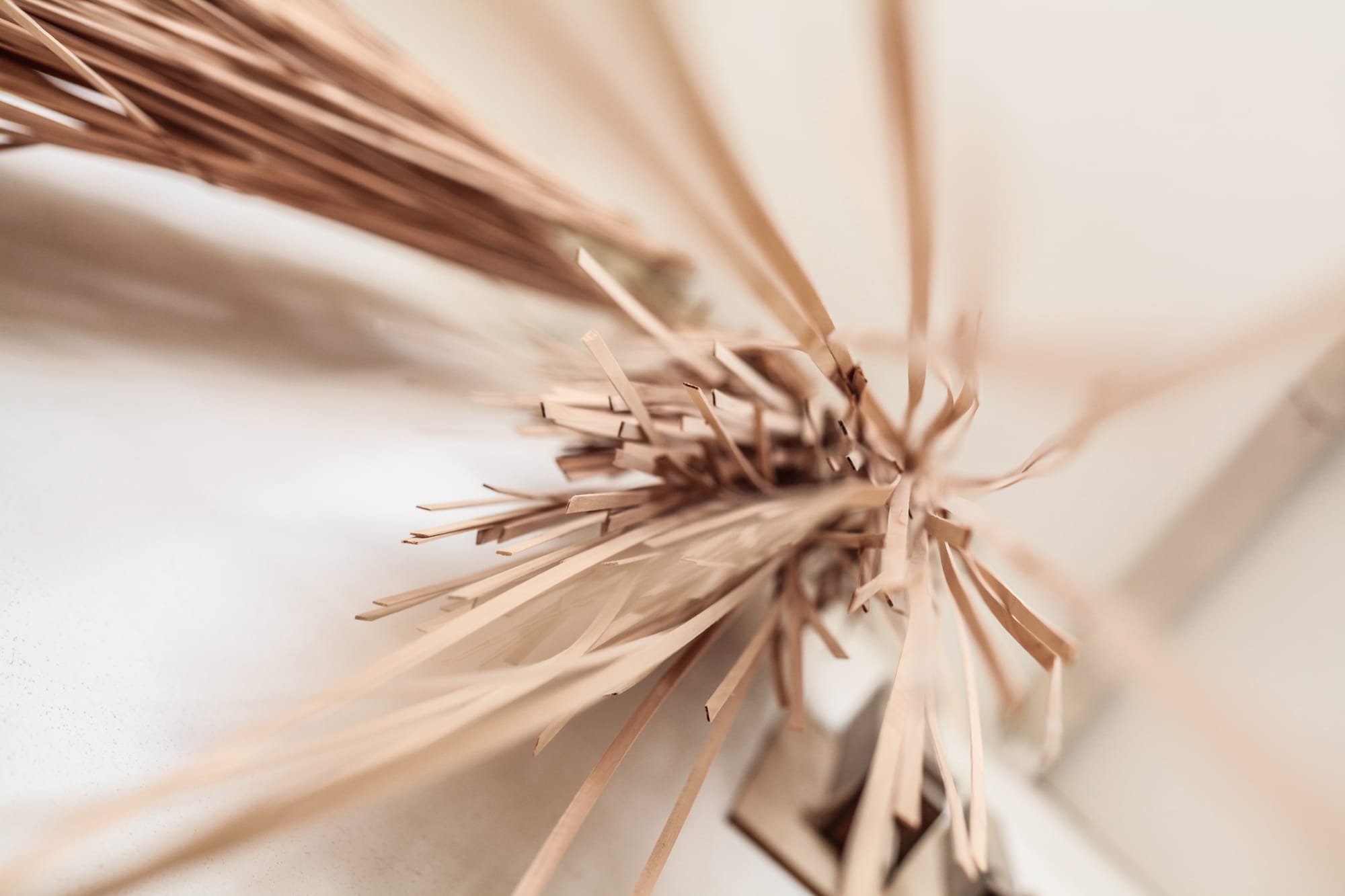
“I cannot control how a tree grows in the forest, nor which one is cut down. I can only teach my people to choose the very best from what we have.”
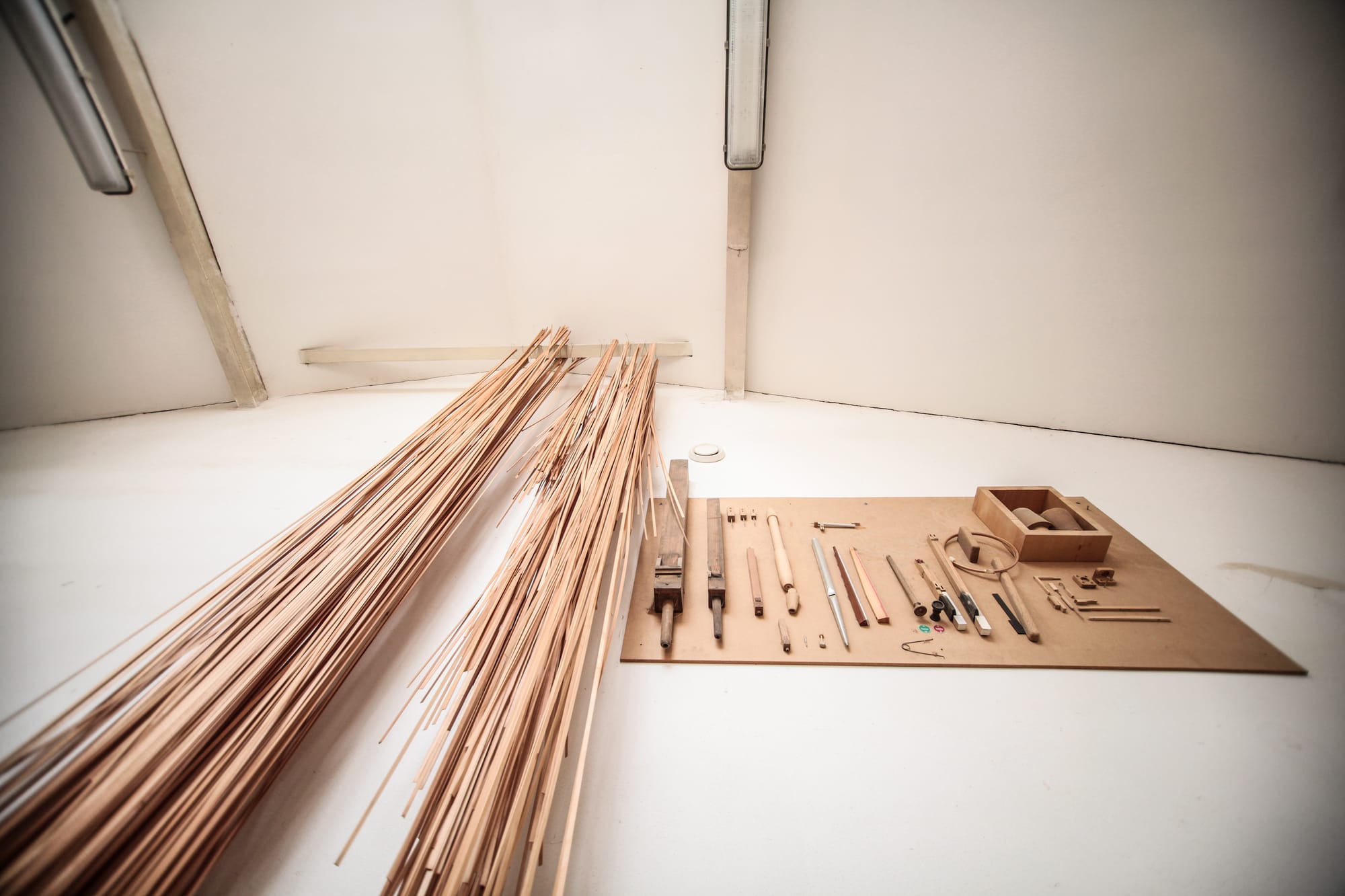
It reflects a way of thinking far removed from modern manufacturing, where everything is expected to be controlled. An organ builder must work with what nature provides while possessing the ability to recognise quality that is not visible at first glance.
Not all materials, however, come from Slovak forests. For certain parts of the instrument, they also use woods that do not grow in our environment, such as ebony or cedar.
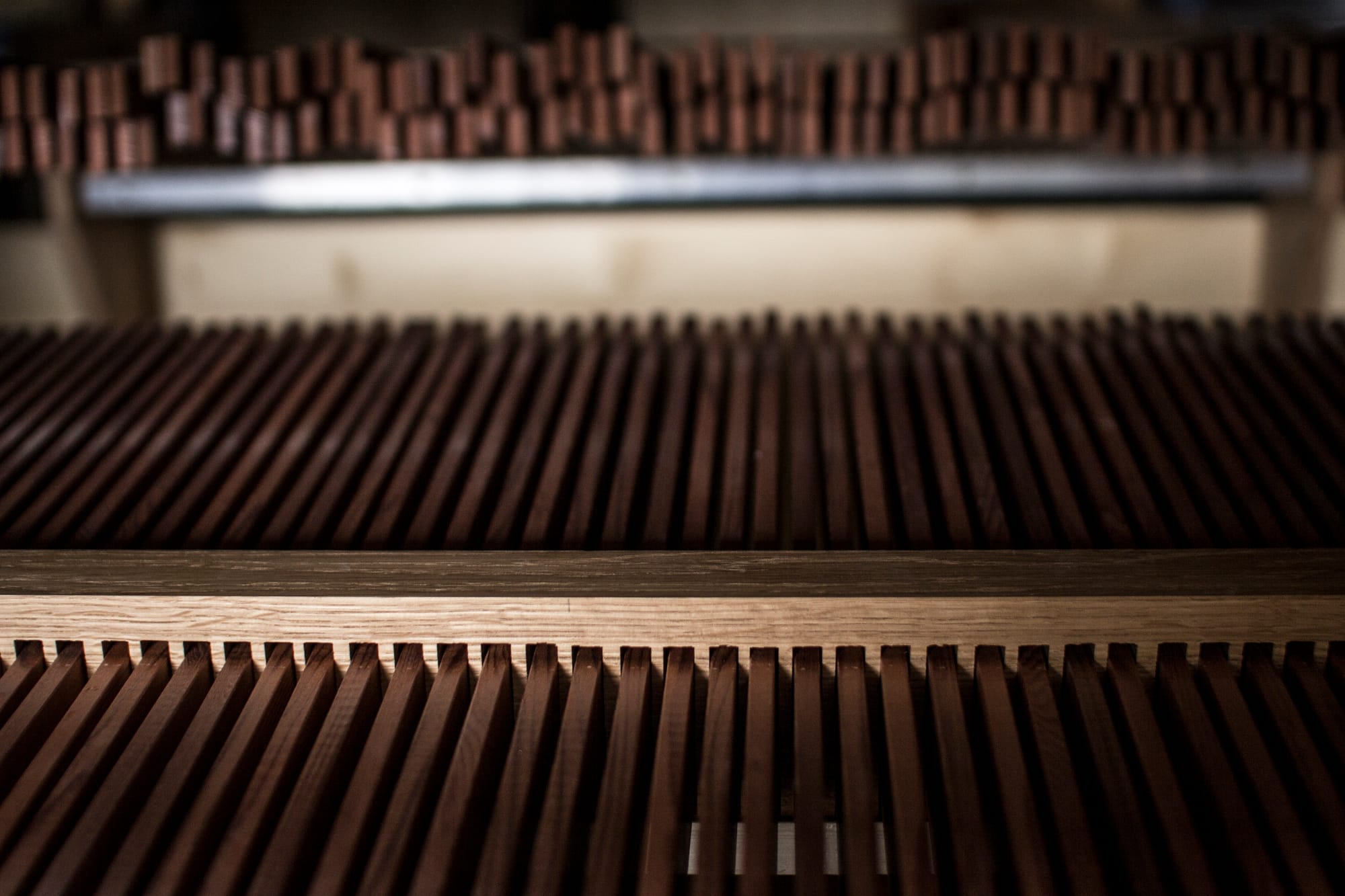
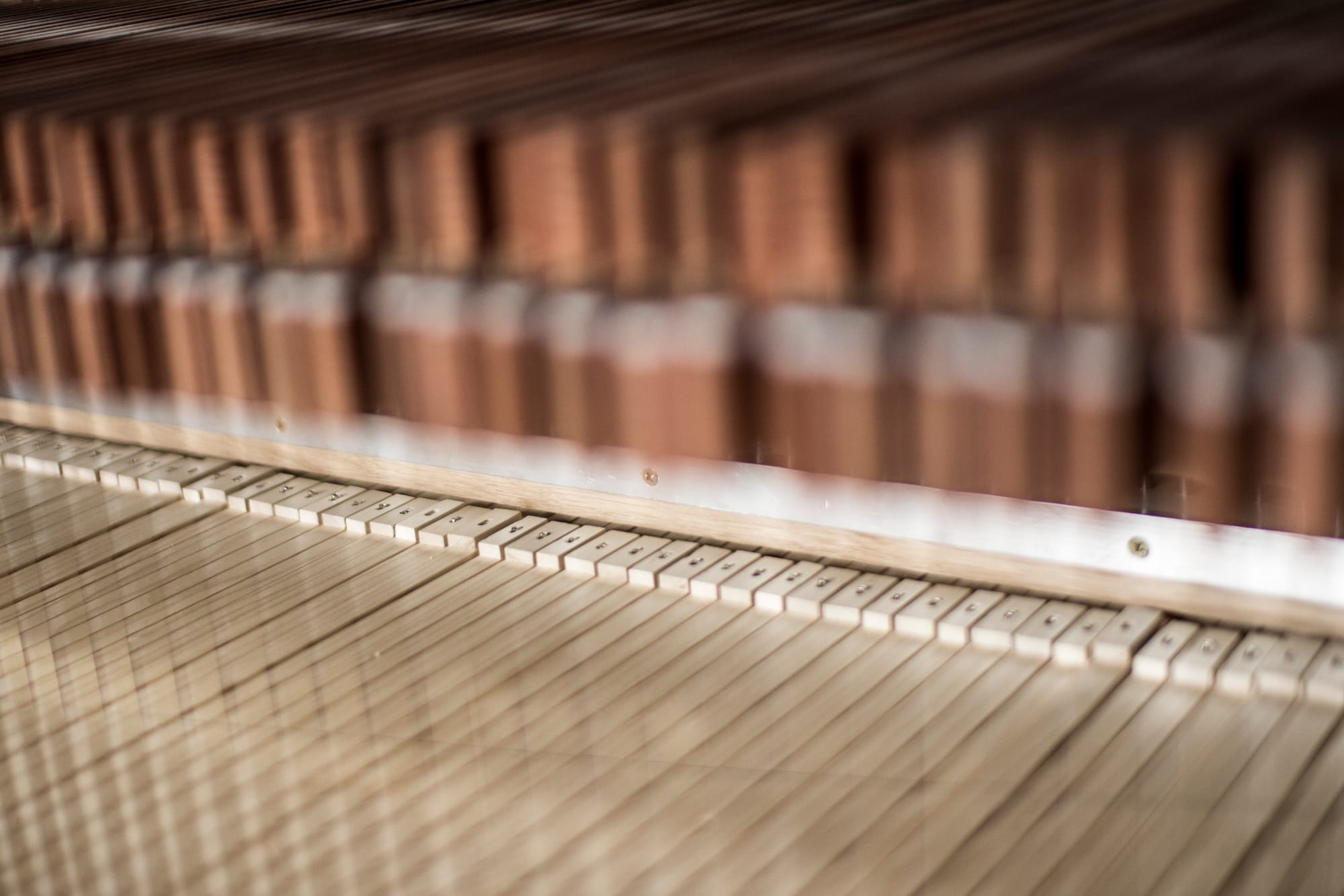
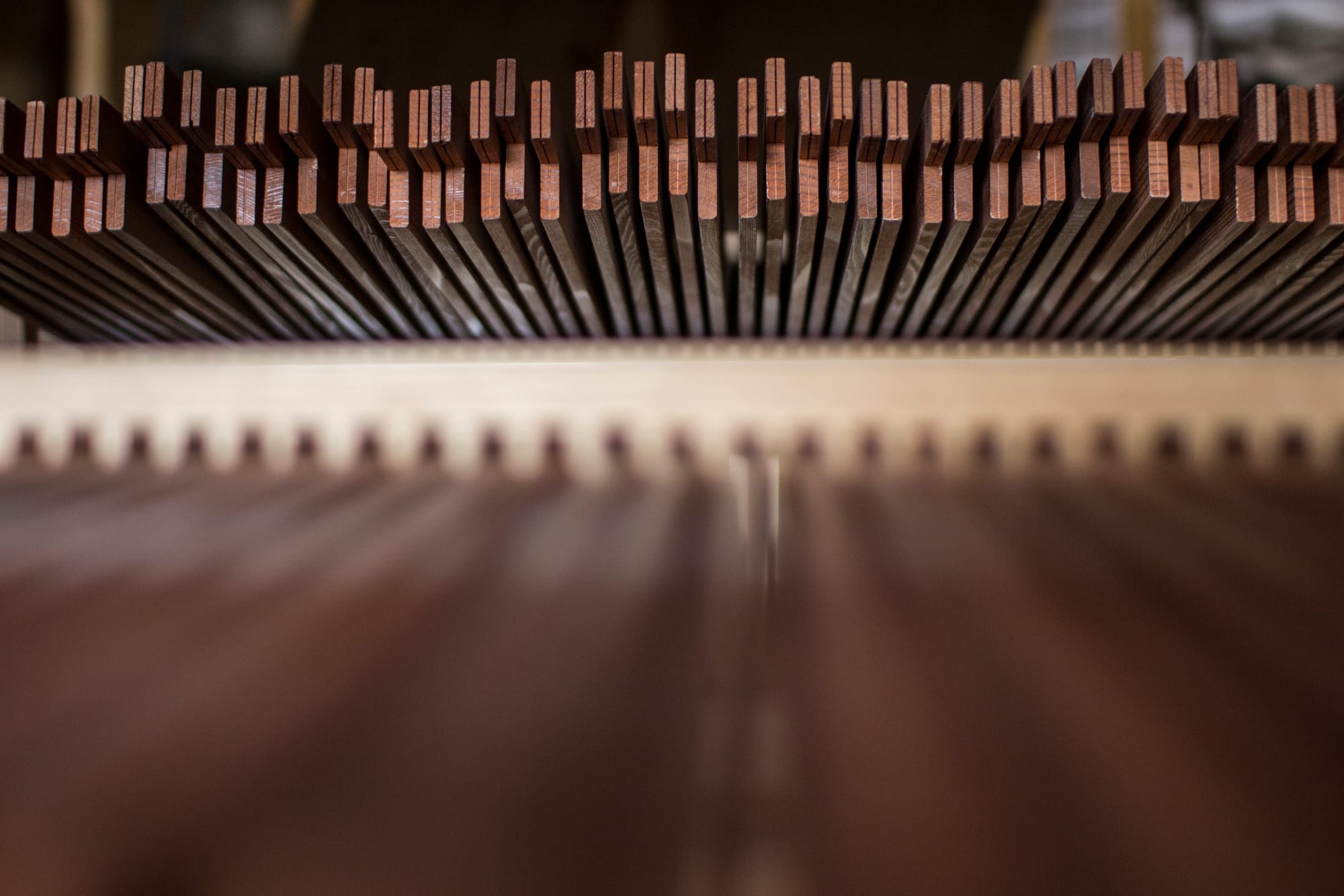
Each organ is the meeting point of different worlds-local craft, natural materials, and knowledge that has travelled between countries over centuries.
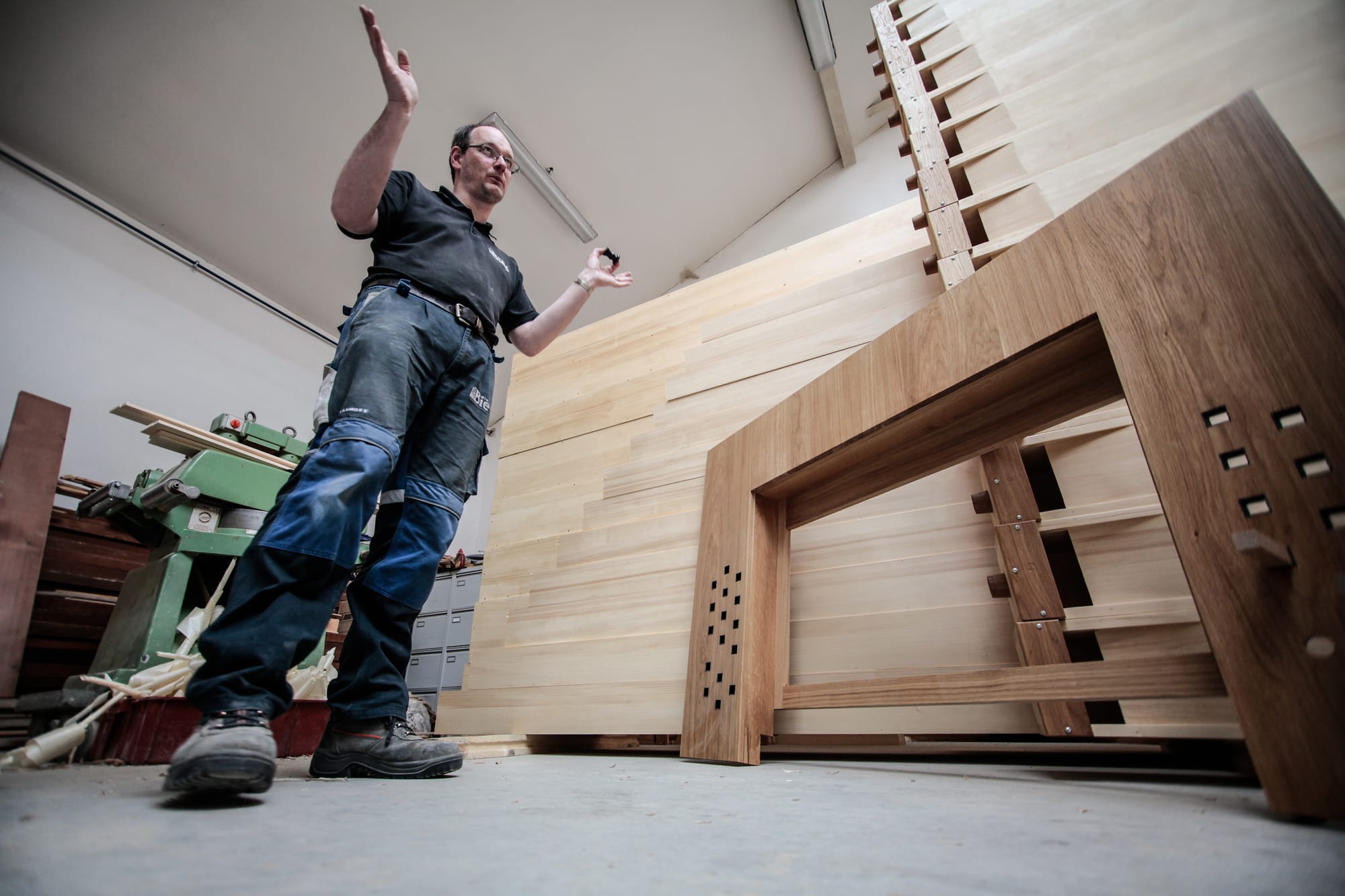
The Sound of Today
The quietest place in the workshop is the voicing room. It is here that all previous decisions are transformed into the final voice of the instrument.
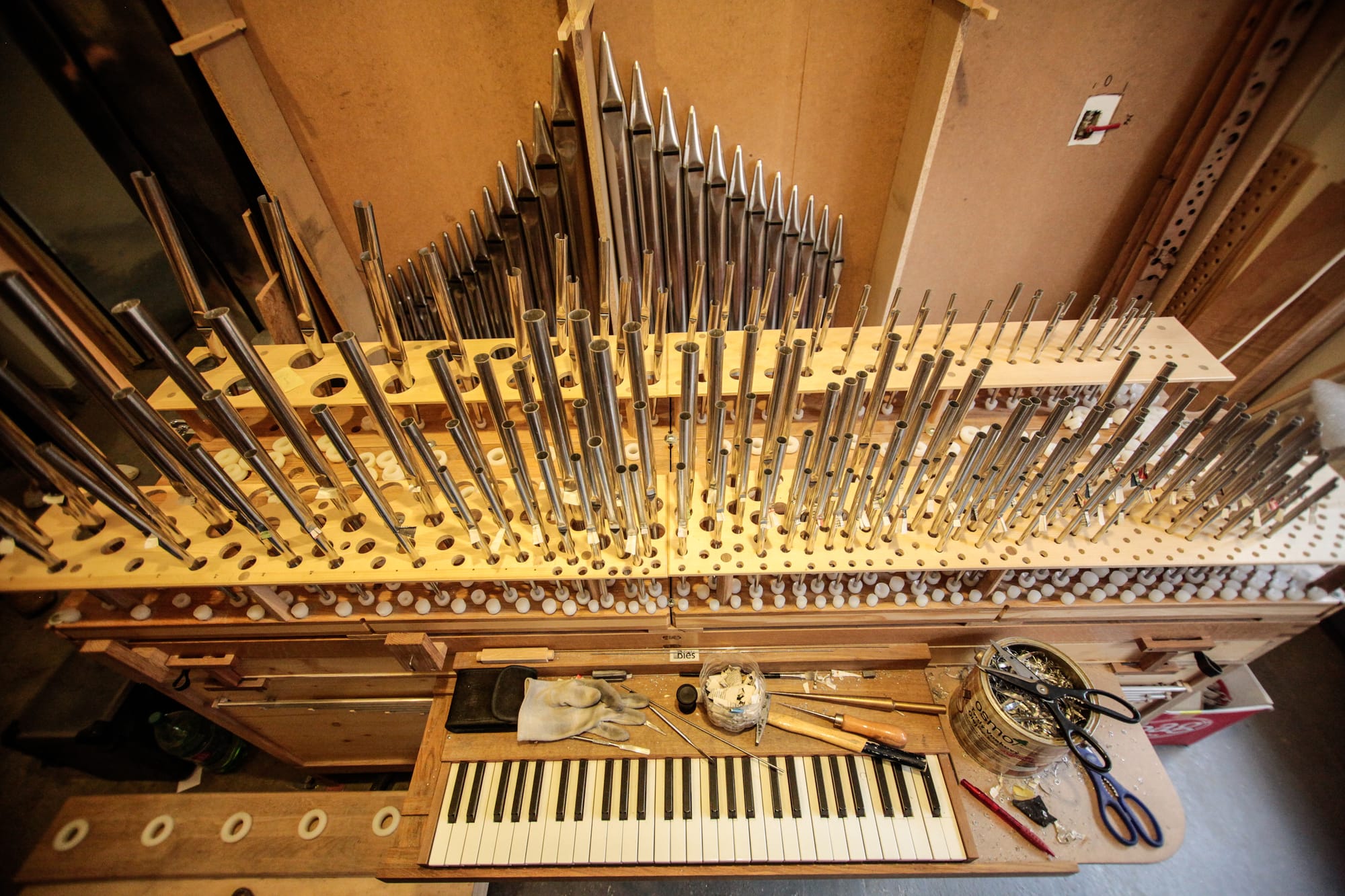
This is where it becomes clear that an organ is not merely a collection of manufactured parts. It is a whole whose character emerges only when the individual components begin to work together.
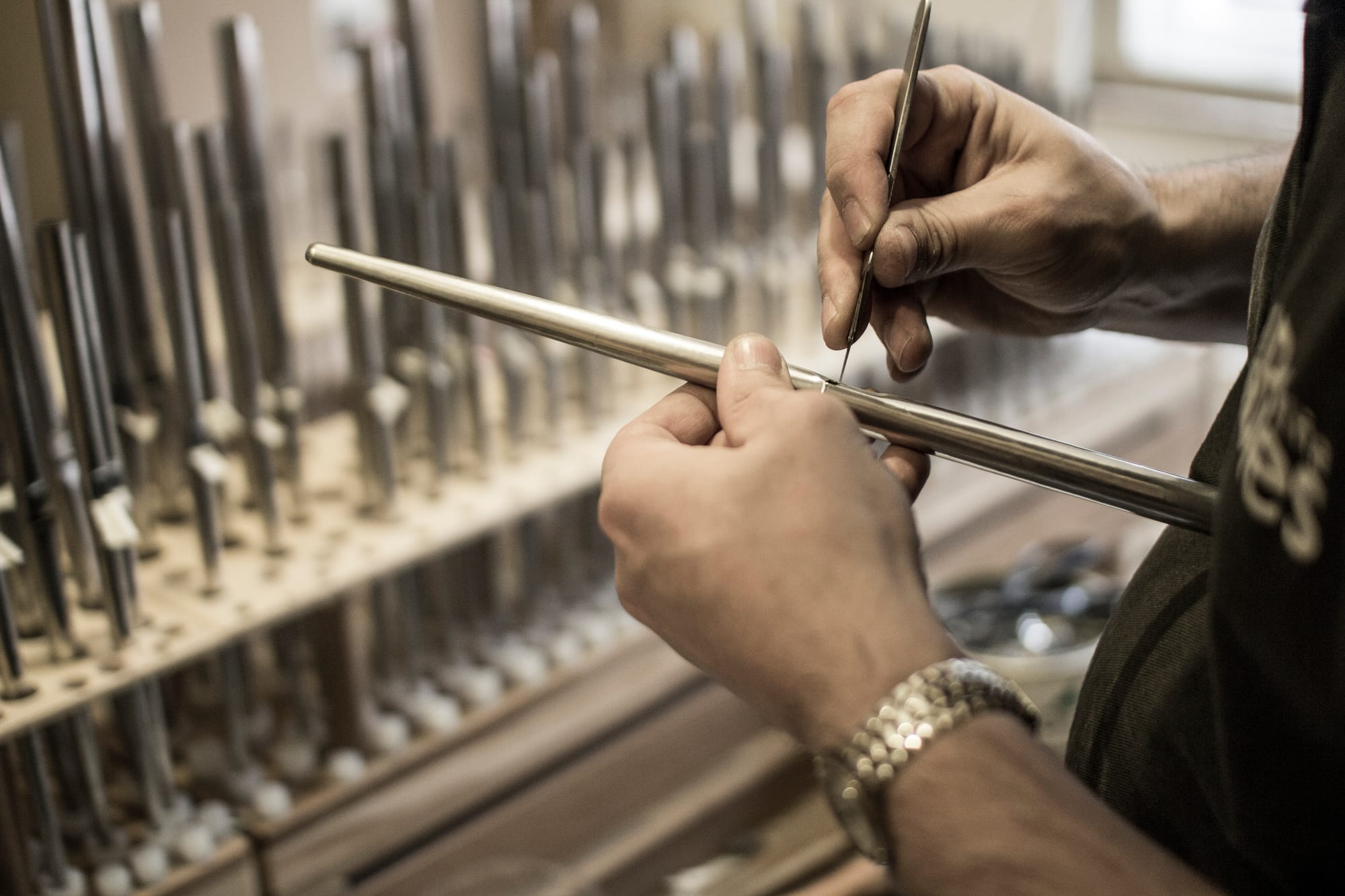
Gabriel Bies can voice around fifty pipes in a day.
“After that, I need auditory silence.”
During our conversation, he repeatedly returns to a question that goes beyond organ building itself. Why is contemporary work with organs so often defined through the sounds of the past?
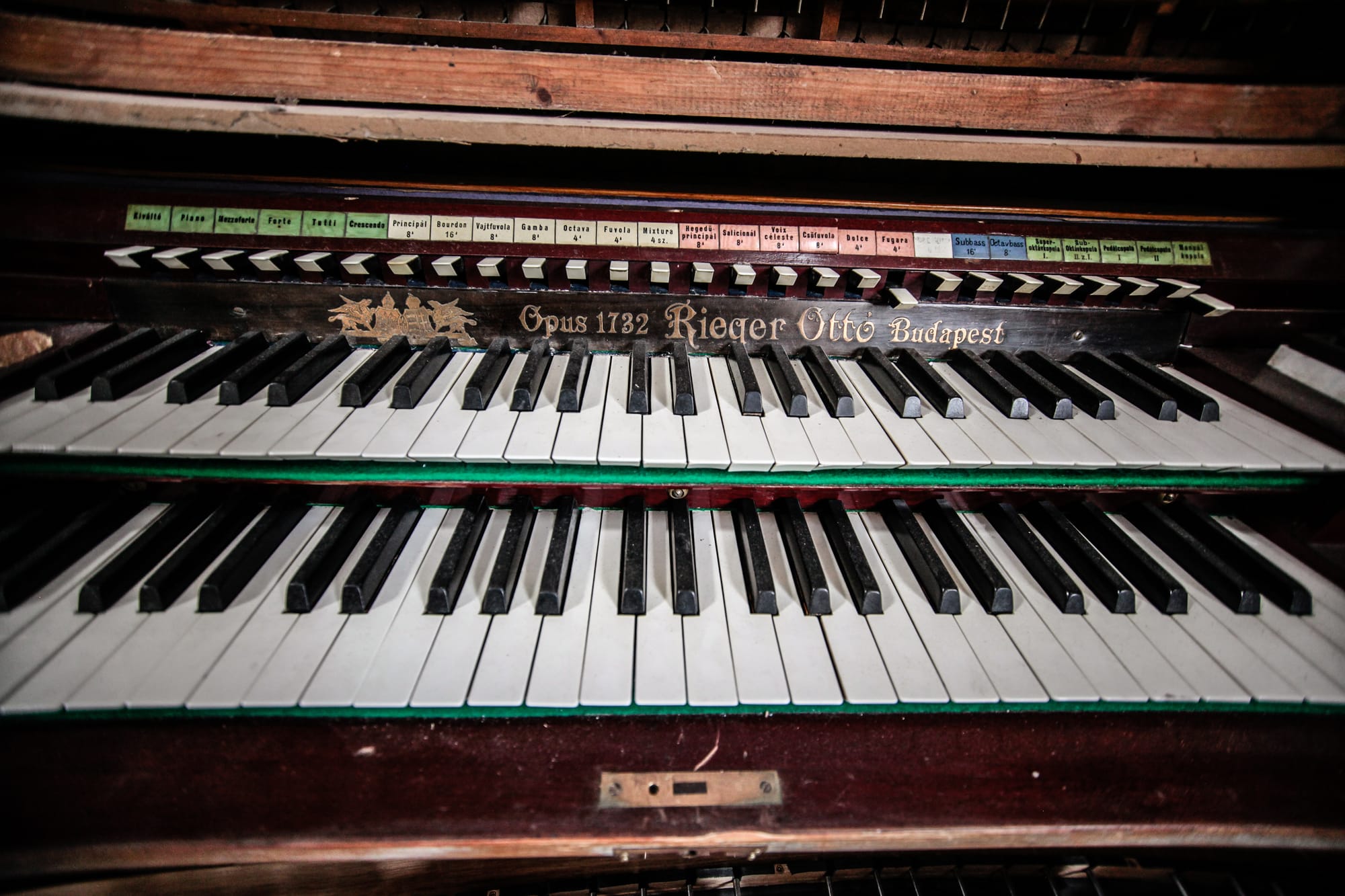
Baroque sound. Classical sound. Romantic sound.
These historical periods remain the reference points by which new instruments are judged.
Then he pauses and asks a question that has clearly occupied his mind for years.
“Where is the sound of our time?”
After a brief moment, he continues.
“We don’t have it because we are always imitating something. I do not accept this path, and I try to avoid it.”
This is not a rejection of tradition. On the contrary, respect for historical instruments is indispensable in organ building. Without knowledge of tradition, it would be impossible to create anything new.
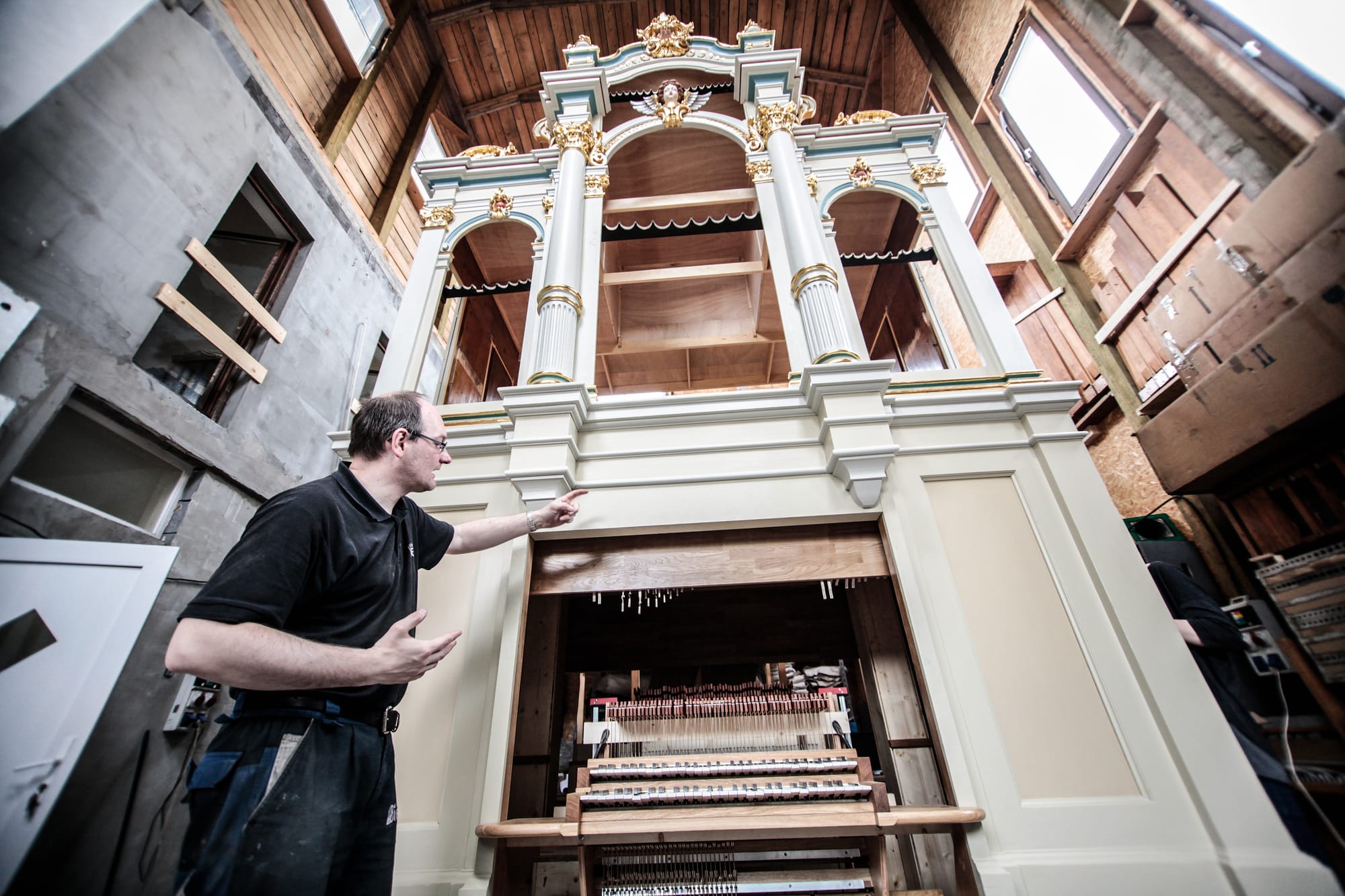
Yet Gabriel Bies rejects the idea that the task of a contemporary organ builder is merely to reproduce the sound of past centuries as accurately as possible.
For him, tradition is not a museum object. It is a conversation that must continue.
A Bespoke Organ
One of the most compelling examples of this approach is the organ in Sabinov. The new instrument was built within the space of a historic gallery dating back to the early 16th century.
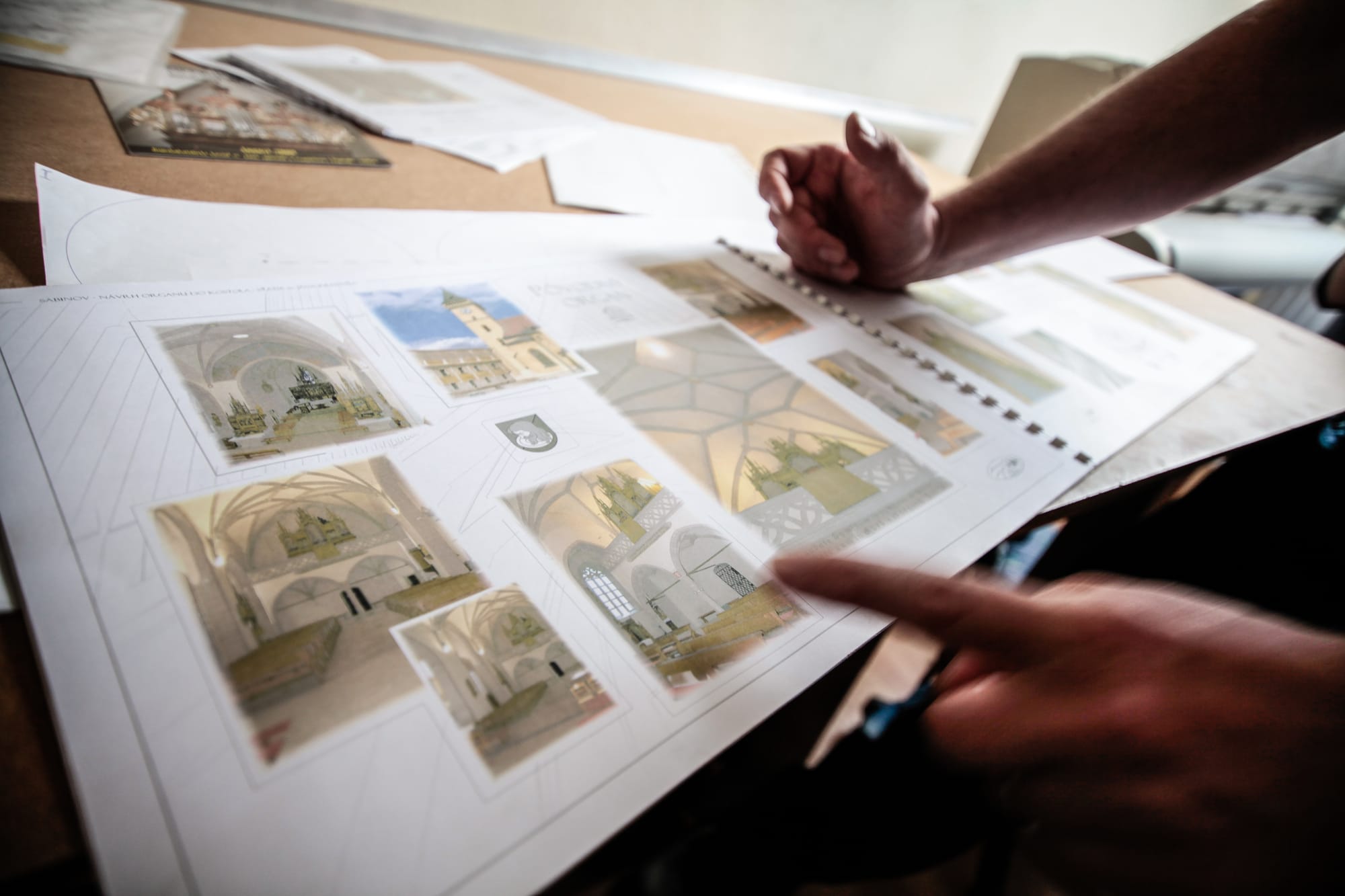
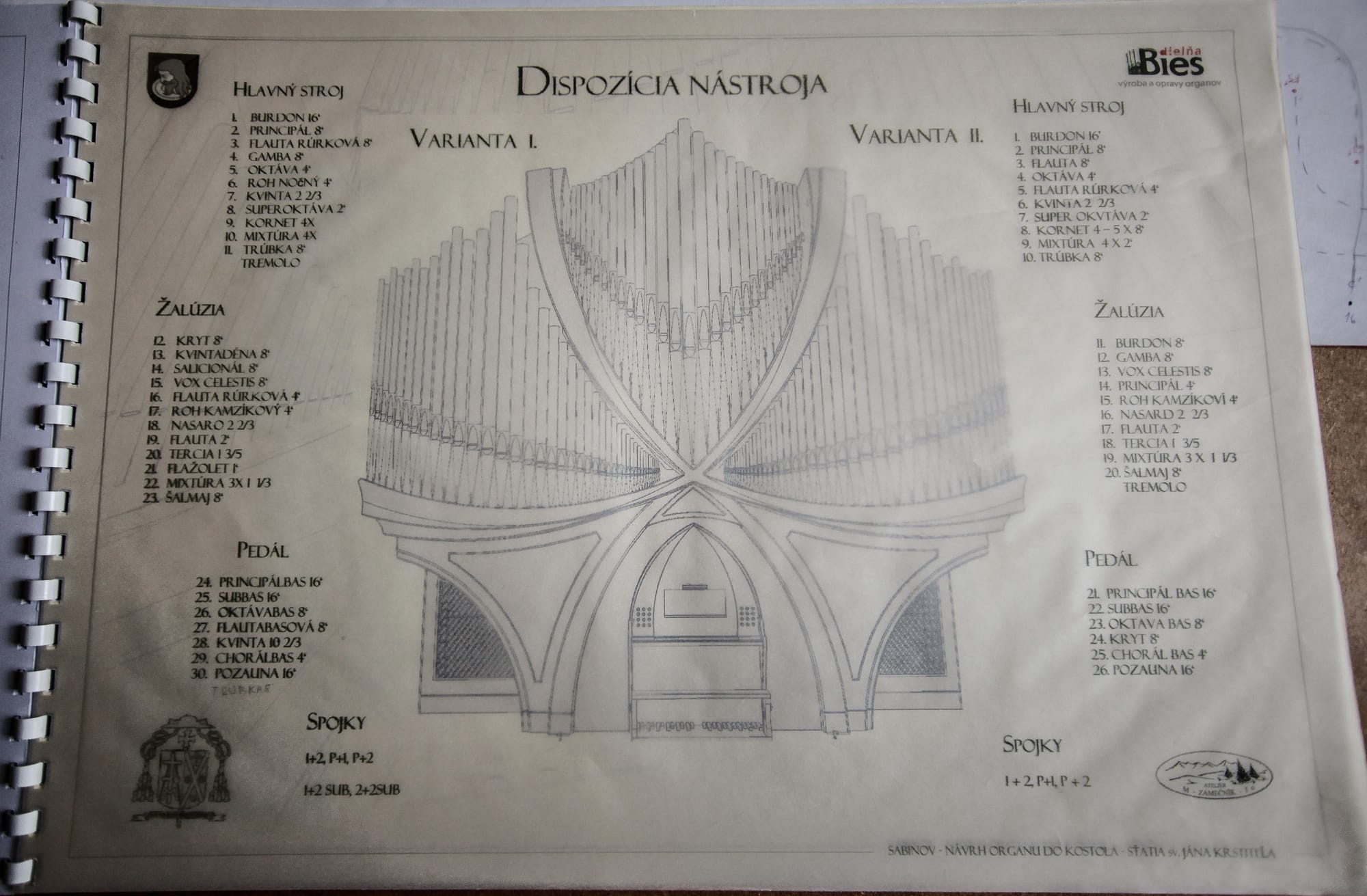
The aim was not to recreate the past. It was to understand the place and respond to it.
“The lines of the gallery’s ribs were translated into the architectural design of the new instrument’s façade.”
Here too, the Bies brothers’ approach to tradition becomes visible. Not as a template to be copied without question, but as something living—a dialogue between the past and the present.
A new instrument does not emerge in isolation from its surroundings. Its form is shaped by the space in which it will sound, as well as by the materials and the people who create it.
With God’s Help, to His Glory
After several hours of conversation about wood, metals, mechanics, and sound, it becomes clear that for the Bies brothers, an organ is more than a musical instrument.
“With God’s help, to His glory.”
Not as a marketing slogan. Rather, as a simple explanation of the inner reason why they do their work.
In their understanding, craft is not merely the production of objects. It is a service that connects people, materials, and something that transcends them.
When asked about the future, however, they speak realistically. A well-built organ can serve for centuries. Few new churches are being built, and many parishes cannot afford a new instrument. As a result, they often turn to digital alternatives.
Gabriel Bies speaks with unusual directness on this subject.
“Christians should not offer people an illusion.”
He does not mean this only in the context of organs. He is speaking about a broader issue—the difference between genuine value and its substitute. An imitation may look similar, but it can never replace the experience of the original.
After a moment, he adds:
“A crisis of the spirit is a greater risk in this regard than an economic crisis. People are losing the ability to distinguish a valuable thing from one that is worthless.”
His words return to a theme that surfaced throughout our conversation.
In the selection of wood.
In the making of pipes.
In the voicing.
In the question of what sound a contemporary organ should have.
It is always about the same thing: the ability to recognise the difference.
Between the real and the substitute.
Between a living tradition and its copy.
Between a past that shapes us, and a past that we merely repeat.
Perhaps that is why Gabriel Bies’s question reaches beyond organs alone.
Where is the sound of our time?
Text: Vladimír Jenčurák, Photo: Tereza Sejková, Naty Ščamborová